
 By admin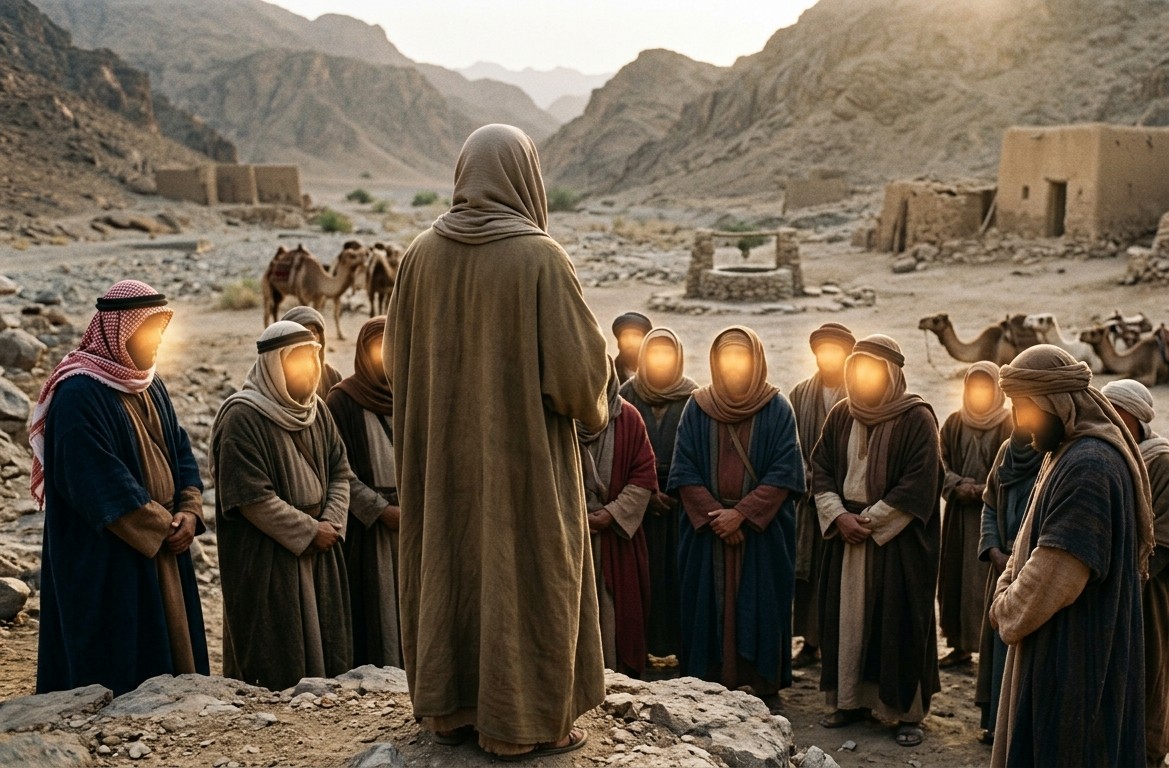
Introduction
After the time of Prophet Nuh (AS) and the Great Flood, humanity once again spread across the earth. As generations passed, many people gradually forgot Allah’s guidance and returned to idol worship. Among these nations was the powerful tribe of ‘Ad, one of the greatest civilizations of the ancient world.
To guide them back to the truth, Allah sent Prophet Hud (AS), a noble messenger chosen from among their own people. His mission was simple yet profound: to call his nation to worship Allah alone and abandon their false gods. Despite receiving clear guidance, the people of ‘Ad rejected his message with arrogance and pride.
The story of Prophet Hud (AS) is a powerful reminder that no civilization, no matter how wealthy or powerful, can survive if it turns away from Allah’s guidance. Their rise and fall remain one of the most important lessons in Islamic history.
Who Were the People of ‘Ad?
The people of ‘Ad lived in a region known as Al-Ahqaf, believed to have been located in the southern Arabian Peninsula. They were blessed with fertile lands, abundant resources, and remarkable physical strength. The Quran describes them as a mighty nation with impressive buildings and towering structures.
The people of ‘Ad became famous for their engineering skills and magnificent architecture. They built enormous homes, strong fortresses, and tall monuments that reflected their wealth and power. Because of their prosperity, they believed no nation could ever defeat them.
However, their success led to arrogance. Instead of thanking Allah for His blessings, they worshipped idols and considered themselves superior to everyone else. Their pride blinded them from recognizing the truth.
Allah reminds us in the Quran:
“And remember when He made you successors after the people of Nuh and increased you greatly in stature. So remember the favors of Allah that you might succeed.” (Quran 7:69)
Despite receiving countless blessings, the people of ‘Ad forgot their Creator. They placed their trust in their own strength rather than in Allah, setting the stage for one of the greatest warnings in history.
Allah Sends Prophet Hud (AS)
Seeing that the people of ‘Ad had turned away from the truth, Allah chose Prophet Hud (AS) from among them to guide them back to the right path. Since he belonged to their own tribe, the people knew him well. They were familiar with his honesty, wisdom, and noble character long before he was appointed as a prophet.
Prophet Hud (AS) called his people with kindness and sincerity. He urged them to worship Allah alone, abandon their idols, and seek forgiveness from their Lord. He reminded them that every blessing they enjoyed—their strength, wealth, fertile lands, and magnificent buildings—had been granted by Allah and should never be taken for granted.
The Quran records his message:
“O my people, worship Allah. You have no deity other than Him. Will you not fear Him?” (Quran 7:65)
Instead of listening, the leaders of the nation rejected him. They accused Prophet Hud (AS) of being foolish and refused to believe that Allah had chosen an ordinary man as His messenger. Their pride prevented them from accepting the truth, and they continued to worship their idols.
The people of ‘Ad even challenged Prophet Hud (AS), claiming that their gods were more powerful than his message. They believed that their physical strength and prosperous civilization made them invincible. In their arrogance, they asked him to bring the punishment he warned them about if he was truly a messenger from Allah.
Despite their insults and rejection, Prophet Hud (AS) remained patient. He never responded with anger or hatred. Instead, he continued to advise his people with compassion, hoping they would repent before it was too late. His unwavering dedication became another timeless example of how Allah’s prophets fulfilled their mission with patience, wisdom, and complete trust in their Lord.
Allah’s Warning and the Arrogance of the People of ‘Ad’
As the people of ‘Ad continued to reject the message of Prophet Hud (AS), Allah sent them clear warnings. One of the first signs was a long period of drought. The rain stopped, their fertile lands began to dry up, and their crops and livestock suffered. This hardship was a chance for them to reflect on their actions, repent, and return to Allah.
Prophet Hud (AS) encouraged his people to seek Allah’s forgiveness. He assured them that sincere repentance would bring Allah’s mercy and restore their blessings. The Quran records his words:
“And O my people, ask forgiveness of your Lord and then repent to Him. He will send rain from the sky upon you in showers and increase you in strength. So do not turn away as criminals.”
(Quran 11:52)
Instead of humbling themselves before Allah, the people of ‘Ad became even more stubborn. They believed their strength and power would protect them from any punishment. Filled with pride, they refused to accept that their prosperity depended entirely on Allah.
After a long period of drought, the people noticed a large dark cloud approaching their valley. They became excited, believing it was finally bringing the rain they had been waiting for. However, Prophet Hud (AS) knew that this was not a cloud of mercy.
The Quran describes this moment:
“Then when they saw it as a cloud approaching their valleys, they said, ‘This is a cloud bringing us rain.’ No! Rather, it is what you were impatient for: a wind containing a painful punishment.”
(Quran 46:24)
What the people thought would bring relief was actually the beginning of Allah’s punishment. Their arrogance had blinded them to the truth, and the warning they had ignored for so long was about to become a reality.
The Destruction of the Nation of ‘Ad’
When the people of ‘Ad refused every warning and continued to reject the message of Prophet Hud (AS), Allah’s promised punishment finally arrived. The dark cloud they had welcomed as a sign of rain brought a powerful and devastating wind instead. It was unlike any storm they had ever experienced.
The Quran describes this punishment as a fierce, freezing wind that blew continuously for seven nights and eight days. The mighty nation that had once taken pride in its strength was left completely helpless before the power of Allah.
Allah says in the Quran:
“So We unleashed upon them a screaming wind during days of misfortune, to make them taste the punishment of disgrace in this worldly life. And the punishment of the Hereafter is even more humiliating, and they will not be helped.”
(Quran 41:16)
The violent wind destroyed everything in its path. It uprooted trees, demolished homes, and swept away the people of ‘Ad. Their magnificent buildings and great civilization could not protect them from Allah’s decree. The nation that once believed no one was stronger than them disappeared from history.
The Quran further states:
“As for ‘Ad, they were destroyed by a furious, bitter wind, which Allah unleashed upon them for seven nights and eight days without interruption. You would have seen the people lying lifeless as though they were hollow trunks of palm trees.”
(Quran 69:6–7)
While the disbelievers were destroyed, Prophet Hud (AS) and the believers were saved by Allah’s mercy. Because of their faith and obedience, they were protected from the punishment that overwhelmed the rest of the nation.
The fall of the people of ‘Ad serves as a timeless reminder that wealth, power, and physical strength cannot save a nation that turns away from Allah. True security comes only through faith, humility, and obedience to the Creator.
Lessons from the Story of Prophet Hud (AS)
The story of Prophet Hud (AS) offers timeless lessons for every generation. It reminds us that no matter how powerful or successful a nation becomes, true strength comes only from Allah. Wealth, impressive buildings, advanced civilizations, and physical power cannot protect people if they turn away from their Creator.
One of the greatest lessons is the danger of arrogance. The people of ‘Ad believed they were the strongest nation on earth and that no one could challenge them. Their pride prevented them from accepting the truth, even when it was clearly presented by Prophet Hud (AS). Their story teaches that arrogance can lead individuals and entire civilizations toward destruction.
Another important lesson is the value of patience in spreading the truth. Prophet Hud (AS) continued to advise his people with wisdom, kindness, and sincerity despite facing rejection and ridicule. He never gave up on his mission and remained faithful to Allah until the very end. His life is an example of perseverance and complete trust in Allah.
The story also highlights Allah’s justice and mercy. While the disbelievers faced the consequences of their actions, Allah protected Prophet Hud (AS) and the believers. This reminds Muslims that Allah never abandons those who remain patient, sincere, and obedient to Him.
Conclusion
The story of Prophet Hud (AS) and the nation of ‘Ad is one of the most powerful accounts in the Quran. It teaches that worldly power, wealth, and pride are temporary, while faith and obedience to Allah have lasting value. The downfall of one of history’s strongest nations serves as a warning for every generation not to let arrogance distance them from the truth.
Today, the story of Prophet Hud (AS) continues to inspire Muslims around the world. It encourages believers to remain humble, trust Allah in every situation, and accept His guidance with sincerity. The rise and fall of the people of ‘Ad remind us that every blessing comes from Allah and that gratitude, faith, and righteousness are the true foundations of success.
Even centuries later, the message of Prophet Hud (AS) remains as relevant as ever, calling humanity to worship Allah alone, reject pride, and live a life of faith, humility, and obedience.
Read our previous article: Noah’s Ark: The Story of Prophet Nuh (AS) to discover how Allah saved the believers through the Ark and the timeless lessons from the Great Flood.
References
The Holy Quran – Surah Al-A’raf (7:65–72)
The Holy Quran – Surah Hud (11:50–60)
The Holy Quran – Surah Al-Ahqaf (46:21–26)
The Holy Quran – Surah Al-Haqqah (69:6–8)
Sahih al-Bukhari
Sahih Muslim
[…] admin Aug 2, 2026 […]