
 By admin
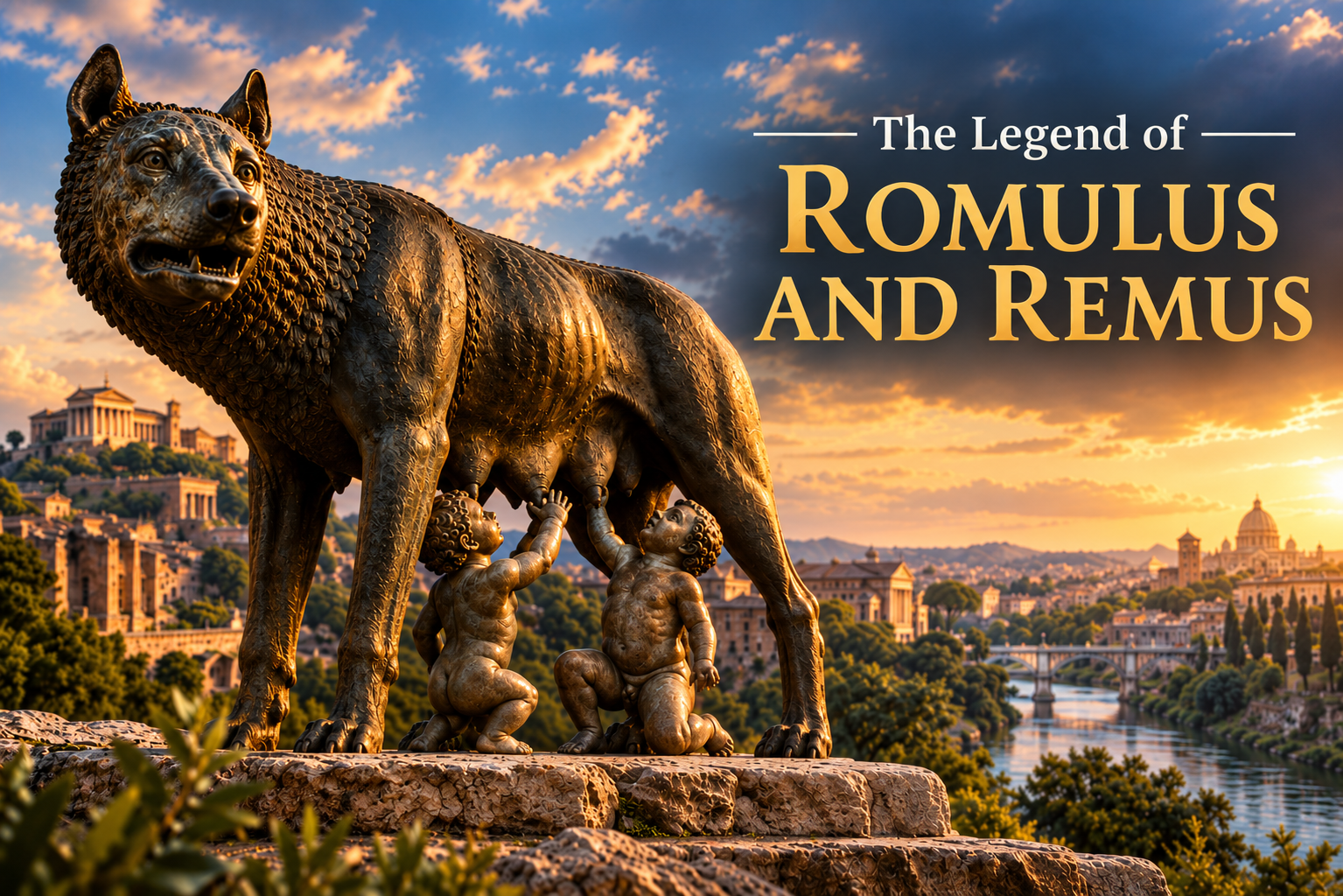
The Twins Behind the Founding of Rome
How did one of the most influential cities in ancient history begin? According to Roman tradition, the story starts with two abandoned twin brothers, a mysterious she-wolf, a struggle for power, and a tragic conflict that changed their lives forever.
The legend of Romulus and Remus is one of the best-known foundation myths of ancient Rome. It explains how Romulus became the city’s legendary founder and why Rome was traditionally believed to have been established in 753 BCE.
However, this is not simply a story of adventure. It combines mythology, family rivalry, divine intervention, and the political identity of the Roman people. Although the twins became central figures in Roman tradition, historians cannot confirm that every event in their story actually happened.
To understand the legend, we must explore both the traditional narrative and the historical evidence behind it.
Who Were Romulus and Remus?
According to Roman mythology, Romulus and Remus were twin brothers born to Rhea Silvia, a woman associated with the royal family of Alba Longa, an ancient city in central Italy.
Their father was said to be Mars, the Roman god of war. This divine connection gave the twins a special place in Roman tradition and helped link Rome’s origins with military strength and divine favor.
Their grandfather, Numitor, was the rightful king of Alba Longa. However, his brother Amulius seized power and feared that Numitor’s descendants might eventually challenge his rule.
In the traditional story, Amulius arranged for Rhea Silvia to become a Vestal Virgin, whose religious duties required her to remain unmarried. When the twins were born, their existence threatened the security of his position.
Fearing a future challenge, Amulius ordered the infants to be abandoned. This decision set the stage for the extraordinary events that followed.
It is important to remember that these details come from ancient literary traditions rather than independently verified records of the twins’ lives.
The She-Wolf That Saved Romulus and Remus
One of the most memorable parts of the legend describes how the newborn twins survived after being abandoned near the Tiber River.
According to the traditional account, the infants were placed in a container and left near the river. The water carried them to a place where they could survive after the river receded.
A she-wolf discovered the babies and reportedly fed them with her milk. The image of a wolf protecting two human infants became one of the most enduring symbols associated with Rome.
Later, a shepherd named Faustulus discovered the twins. He and his wife, Acca Larentia, raised them as their own children.
As the brothers grew older, they became strong and courageous young men. They were associated with the shepherding communities around them and became involved in local disputes and conflicts.
What Does the She-Wolf Symbolize?
The she-wolf represents survival, protection, and the extraordinary beginnings of Rome. The image also became an important part of Roman cultural identity.
Yet the wolf story belongs to mythology. It should not be presented as an event confirmed by historical evidence.
The famous image of a she-wolf nursing two infants became a powerful visual representation of Rome’s origins. Ancient Roman traditions and artwork helped preserve the story long after the city’s early history.
How the Twins Discovered Their Royal Origins
As young men, Romulus and Remus became involved in conflicts between groups connected with the rival royal lines of Alba Longa.
In the traditional narrative, Remus was eventually captured and brought before Numitor. As the story unfolded, questions arose about the young man’s background and the circumstances of his birth.
Faustulus also came to understand that the twins might have a royal origin. The details differ among ancient accounts, but the brothers eventually discovered their connection to Numitor and learned about Amulius’s actions.
The revelation changed their position. They were no longer simply young men raised by a shepherd’s family; according to the legend, they were descendants of the displaced royal line.
Romulus and Remus joined the effort to challenge Amulius. In the traditional story, they helped overthrow him and restored Numitor to power.
Their victory brought the family conflict to an end, but it also led the brothers toward a new ambition: establishing a city of their own.
Why Did Romulus and Remus Fight?
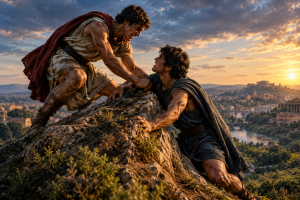
After the victory over Amulius, the twins decided to establish a settlement in the region where they had grown up. However, they disagreed about where the new city should be built and who should lead it.
According to one famous version, Romulus favored the Palatine Hill, while Remus preferred another location, often identified as the Aventine Hill.
The brothers sought a sign from the gods to settle the dispute. They watched for birds, interpreting their appearance as a form of divine guidance known in Roman tradition as augury.
The accounts disagree about the details of the contest. In the version told by Livy, Remus saw six vultures first, while Romulus later saw twelve. Their supporters disagreed over whether the earlier sighting or the greater number meant victory.
The dispute became more serious, and the brothers’ rivalry ended in tragedy.
How Did Remus Die?
The most familiar version says that Remus mocked the new city’s defenses by jumping over a wall that Romulus had begun building. Romulus became angry, and Remus was killed.
In Livy’s account, however, an alternative version also appears: Remus died during the violent conflict that followed the dispute over the signs from the gods.
Other ancient writers preserve variations, including accounts that assign the fatal act to another person.
Therefore, it is more accurate to say that the legend has several versions than to claim that historians know exactly how Remus died.
The story’s central theme remains clear: the founding of Rome was remembered as an event marked by rivalry, sacrifice, and the struggle for authority.
How Was Rome Founded in 753 BCE?
After Remus’s death in the traditional narrative, Romulus became the sole founder and ruler of the new city. Rome was named after him, according to the familiar legend.
The traditional date of Rome’s founding is 753 BCE. Roman scholars later used this date to organize their accounts of the city’s early history.
Romulus was credited with establishing the city’s first institutions and creating the foundations of its political and military organization. Later traditions also associated him with the growth of the early community and the beginning of Rome’s royal period.
However, the traditional date should not be confused with a precisely verified archaeological event.
What Does Archaeology Tell Us About Early Rome?
Archaeological evidence indicates that settlements existed on the hills of Rome before the traditional founding date. The city developed gradually as communities in the area grew and became more closely connected.
There is no conclusive archaeological evidence proving that Romulus and Remus lived exactly as the legend describes. Their story is primarily known through ancient literary traditions recorded long after the period in which the events supposedly occurred.
The distinction matters: archaeology can help historians investigate how early Rome developed, while the story of the twins reveals how Romans later explained their origins.
[INTERNAL LINK: Link the phrase “rise of the Roman Empire” to your existing article, “The Rise of the Roman Empire: From Village to Empire.”]
Was the Story of Romulus and Remus Real?
The short answer is that the story cannot be verified as a complete historical account.
Ancient writers preserved versions of the legend, but they did not all agree on every detail. The stories were written down centuries after the traditional founding date, and they include divine parentage, supernatural elements, and dramatic events that cannot be independently confirmed.
The Roman historian Livy discussed the traditional story in his history of Rome. Plutarch also wrote about Romulus and recorded variations in the traditions surrounding the city’s foundation.
These works are valuable sources for understanding Roman beliefs and historical memory. However, they do not provide modern eyewitness evidence that every episode occurred as described.
Archaeological discoveries support the existence of early settlements in the area that became Rome. They do not establish that the twins were rescued by a she-wolf or that the city was founded through the exact sequence of events described in the myth.
A careful historical interpretation therefore separates two questions:
- What did Romans believe about their origins? The story of Romulus and Remus was an important part of their traditional identity.
- What can historians independently establish? Early Rome developed from settlements over time, while the personal story of the twins remains unverified.
This distinction does not make the legend unimportant. Myths can reveal how ancient societies understood power, religion, identity, and the past.
Why Does the Legend of Romulus and Remus Still Matter?
The legend survived because it offered the Romans a dramatic explanation for the beginning of their city. It connected Rome with the gods, presented its founder as an exceptional figure, and explained why the city carried the name of Romulus.
The story also contained themes that remained relevant throughout Roman history: ambition, competition, leadership, loyalty, and the costs of political conflict.
The image of the she-wolf and the twins became a recognizable symbol of Rome. It appeared in Roman artistic and cultural traditions and continued to be associated with the city in later centuries.
The legend also reminds modern readers that the history of a civilization includes more than dates and military campaigns. The stories people tell about their beginnings can influence how they understand their identity and place in the world.
For historians, the legend is valuable not because every detail can be proved, but because it helps explain how Romans remembered and interpreted their own past.
Frequently Asked Questions
Who were Romulus and Remus?
Romulus and Remus were twin brothers in Roman mythology. According to tradition, they were the sons of Rhea Silvia and the god Mars and were associated with the founding of Rome.
Who raised Romulus and Remus?
According to the legend, a she-wolf cared for the abandoned infants before the shepherd Faustulus and his wife, Acca Larentia, raised them.
Why did Romulus kill Remus?
In one well-known version, Remus mocked Romulus’s new city wall by jumping over it, and Romulus killed him in anger. Ancient accounts preserve different versions of the brothers’ conflict and Remus’s death.
When was Rome founded according to legend?
The traditional founding date is 753 BCE. This is a date preserved in Roman tradition, not a precisely confirmed archaeological date for the city’s creation.
Was Romulus a real historical person?
His existence as described in the legend has not been independently established. Historians distinguish the traditional account from archaeological evidence for the early settlements that developed into Rome.
What is the significance of the she-wolf?
The she-wolf symbolizes the survival of the twins and became one of the best-known symbols associated with Rome’s legendary origins.
Conclusion: A Legend That Shaped Rome’s Identity
The legend of Romulus and Remus tells a dramatic story of abandoned infants, unexpected survival, royal revenge, rivalry, and the founding of a city. Romulus emerged from the tale as Rome’s legendary founder, while Remus’s tragic fate became part of the story’s lasting significance.
Although historians cannot verify the legend in full, it remains an important source for understanding how Romans imagined their beginnings. Archaeology offers a different perspective, showing that Rome developed gradually from early settlements in central Italy.
Together, the myth and the archaeological evidence help explain two sides of Rome’s past: the story its people told about themselves and the material traces through which historians investigate the city’s development.
The legend of Romulus and Remus continues to endure because it connects the beginnings of Rome with timeless questions about power, identity, ambition, and the price of founding something new.
Explore More Ancient History
If you enjoyed this story about Romulus and Remus, explore our other historical articles to discover more fascinating events and stories from the ancient world.
The Rise of the Roman Empire: From Village to Empire
The Fall of the Roman Empire: Why Rome Fell
The Golden Age of Rome: When the Roman Empire Reached Its Greatest Glory
Click on any title above to continue exploring ancient Rome and uncover more fascinating stories from the past.
Historical note: The founding date of 753 BCE and the lives of Romulus and Remus belong to Roman tradition. The twins’ story should be distinguished from the archaeological evidence for the early development of Rome.
[…] tradition tells the story of twin brothers, Romulus and Remus, who were supposedly descended from the Trojan hero Aeneas. Their mother, Rhea Silvia, was […]