
 By admin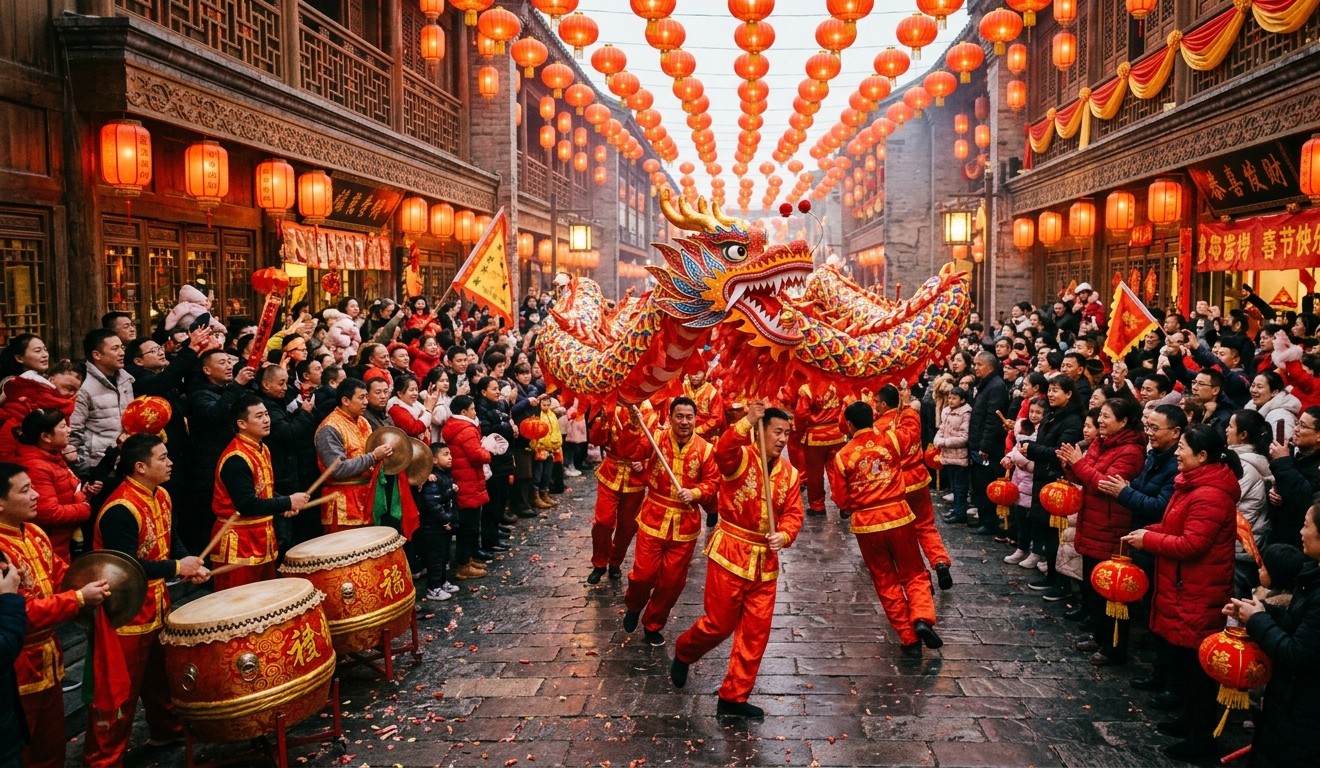
The Dragon in Chinese Culture
Imagine the Chinese Dragon—a powerful mythical creature with a long serpentine body, shining scales, antler-like horns, and the ability to move between the heavens, earth, and water.
In Chinese culture, the dragon is not simply a mythical monster. For thousands of years, it has been a powerful symbol associated with strength, good fortune, protection, water, and prosperity.
Unlike many Western stories where dragons are often portrayed as dangerous creatures that must be defeated, the traditional Chinese dragon has usually been viewed in a much more positive way.
Chinese dragons are commonly associated with rain, rivers, lakes, and the sea. Because agriculture depended heavily on water, the dragon became connected with fertility and successful harvests.
The dragon also became closely associated with power and authority. Chinese emperors sometimes used the dragon as a symbol of imperial rule, and the famous Dragon Throne represented the emperor’s position.
Over centuries, the dragon appeared in Chinese art, architecture, clothing, pottery, literature, festivals, and religious traditions.
But where did this fascinating creature come from?
The origins of the Chinese dragon are extremely old, and its appearance may have developed from a combination of different animals, legends, and ancient beliefs.
How Did the Chinese Dragon Begin?
The origins of the Chinese dragon reach deep into the ancient history of China. Unlike a real animal, the dragon appears to have developed from a mixture of different creatures, symbols, and beliefs that existed among early Chinese communities.
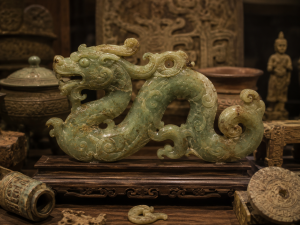
Ancient Chinese people created images of dragon-like creatures long before the familiar dragon design became established. Archaeological discoveries have revealed early dragon figures made from jade, pottery, bone, and other materials.
One famous example is the Hongshan culture, which existed in parts of northern China thousands of years ago. Archaeologists have discovered jade objects shaped like curved, animal-like creatures that are sometimes described as early dragon forms.
Over time, different Chinese communities developed their own ideas about dragon-like beings. Some traditions connected them with snakes, fish, crocodiles, deer, horses, birds, and other animals.
As these traditions gradually merged, the Chinese dragon developed its distinctive appearance—a long body, horns, claws, scales, and a powerful connection with water and the sky.
There is no single historical moment when the Chinese dragon was “created.” Instead, its image and meaning evolved over many centuries.
By the time China’s early imperial states became more powerful, the dragon had already become an important cultural and spiritual symbol.
But its connection with water and rain would make it especially important to agricultural communities.
The Dragon, Rain, and the Power of Water
One of the most important roles of the Chinese dragon was its connection with water and weather.
For ancient Chinese farmers, rainfall was essential. A good harvest depended on having enough water for crops, while droughts and floods could threaten entire communities. Because of this, people developed beliefs about supernatural beings that controlled rivers, rain, and other natural forces.
The dragon became strongly associated with rain, rivers, lakes, and the sea. In many traditional stories, dragons were believed to live in bodies of water and have the power to bring rain to the land.
This connection made the dragon a symbol of fertility and prosperity. When rain arrived at the right time, crops could grow and communities could survive. As a result, the dragon was often respected rather than feared.
Different regions of China developed their own stories about powerful water dragons. Some traditions described Dragon Kings, supernatural rulers believed to control the seas and weather.
People could make offerings or hold ceremonies asking these powerful beings for rain and protection.
The dragon’s connection with water also helped explain why it became one of the most important creatures in Chinese mythology.
But the dragon’s influence did not remain limited to nature.
Over time, it became closely connected with Chinese emperors and imperial power.
The Dragon and the Chinese Emperor
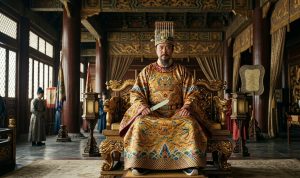
As the Chinese dragon became more powerful as a cultural symbol, it also became closely connected with imperial authority.
Chinese emperors were traditionally viewed as rulers with a special connection to heaven. Over time, the dragon became a symbol of this authority and was used to represent the emperor’s power, strength, and status.
During later imperial periods, the five-clawed dragon became particularly associated with the emperor. Dragon designs appeared on imperial robes, furniture, buildings, ceramics, and other objects connected with the royal court.
The emperor’s throne was sometimes called the Dragon Throne, while the emperor himself could be described using dragon-related expressions. These symbols emphasized that the emperor stood at the center of the political and social order.
Dragon imagery was carefully regulated in imperial society. Certain dragon designs and objects were associated specifically with the emperor, while other members of the royal family and officials could have different versions depending on their rank.
The dragon’s association with imperial power lasted for centuries, making it one of the most recognizable symbols of China’s imperial tradition.
But the dragon was not only a symbol of rulers and authority.
For ordinary people, it also represented good fortune, protection, strength, and prosperity.
And nowhere is this more visible than in China’s traditional festivals.
The Dragon in Chinese Festivals and Celebrations
The dragon remains one of the most recognizable symbols in Chinese celebrations. It appears in festivals, performances, decorations, and traditional artwork, often representing good fortune, strength, prosperity, and protection.
One of the most famous traditions is the Dragon Dance. During the performance, a group of people holds a long dragon costume and moves it through coordinated steps, making the creature appear to twist, turn, and dance.
The Dragon Dance is especially popular during the Chinese New Year and other important celebrations. Drums, gongs, and music often accompany the performance, creating a lively atmosphere.
The dragon also appears in decorations during festivals. Dragon images may be displayed on banners, lanterns, clothing, buildings, and other objects as a symbol of good luck.
Another important event connected with the dragon is the Dragon Boat Festival. Dragon-shaped boats race across rivers while teams paddle together to the rhythm of drums. The festival has a long history and is associated with several traditional stories and customs.
These celebrations show that the dragon is not simply a creature from ancient mythology. It remains a living symbol within Chinese cultural traditions.
But the dragon’s importance goes beyond festivals and public celebrations.
The Dragon in Chinese Art and Architecture
The dragon became one of the most important subjects in Chinese art and architecture. Artists used dragon designs to express power, protection, prosperity, and connections with nature.
Dragon images appeared on temple walls, palace decorations, paintings, sculptures, ceramics, silk fabrics, furniture, and jewelry. Their detailed bodies, scales, claws, and flowing shapes made them especially popular among Chinese artists.
In imperial architecture, dragon designs were often used to emphasize the importance of the emperor and the royal court. The creatures could appear on palace roofs, doors, columns, walls, and ceremonial objects.
The Forbidden City in Beijing contains many examples of imperial dragon imagery. Dragons appear in decorations throughout the complex, reflecting their association with imperial authority.
Dragons were also common in traditional Chinese paintings. Artists sometimes placed them among clouds, waves, mountains, or storms, emphasizing their connection with the sky and water.
The design of the dragon itself could vary. Some representations showed a long, snake-like body, while others emphasized its claws, horns, or connection with clouds and waves.
Because the dragon had so many meanings, artists could use the same creature to represent different ideas depending on the object or setting.
Over thousands of years, these artistic traditions helped make the dragon one of the most recognizable symbols of Chinese civilization.
But why did the dragon become such a positive and powerful symbol in Chinese tradition?
The Dragon in Chinese Art, Architecture, Clothing, and Everyday Objects
The dragon became one of the most recognizable symbols in Chinese art and design. For centuries, artists and craftspeople used dragon imagery to represent power, protection, good fortune, prosperity, and imperial authority.
Dragons in Art
Chinese artists frequently depicted dragons among clouds, waves, mountains, and storms. These surroundings emphasized the dragon’s connection with water, rain, and the heavens.
Dragon paintings could be found on silk, paper, screens, ceramics, and other artistic works. Artists often gave the dragon a long, flexible body, sharp claws, horns, scales, and a powerful expression.
The way a dragon was portrayed could also communicate its meaning. A dragon surrounded by clouds might emphasize its connection with the heavens, while one moving through waves could represent its association with water.
Dragons in Architecture
Dragon designs became especially important in palaces, temples, and other important buildings.
In imperial architecture, dragons were used to symbolize the emperor’s authority. They appeared on walls, roofs, doors, columns, stairways, and decorative objects.
The Forbidden City in Beijing contains numerous examples of dragon imagery. These decorations helped create an atmosphere of power and emphasized the connection between the emperor and the traditional idea of heavenly authority.
Dragons also appeared in temples and religious buildings, where they could represent protection and supernatural power.
Dragons in Clothing
Dragon designs were also used on traditional Chinese clothing, especially garments connected with the imperial court.
The most famous example is the imperial dragon robe. Dragon motifs were embroidered onto richly decorated robes worn by emperors and members of the royal family.
The number of claws and the style of the dragon could be significant because different dragon designs could indicate social rank or status.
Dragon embroidery was not limited to clothing. Dragon patterns could also appear on silk fabrics, accessories, shoes, and ceremonial garments.
Dragons in Everyday Objects
Dragon imagery eventually became part of many objects used in daily and ceremonial life.
Dragon designs appeared on porcelain, pottery, jewelry, furniture, boxes, mirrors, ornaments, coins, and decorative household objects.
A dragon on a ceramic bowl or vase was not necessarily meant to represent something frightening. Instead, it could symbolize good fortune, strength, or protection.
Dragon-shaped decorations were also used on objects associated with important occasions, celebrations, and religious traditions.
Through all these forms, the dragon became more than a creature from mythology. It became a visual language through which Chinese people could express ideas about power, nature, prosperity, and cultural identity.
Even today, dragon imagery continues to appear in Chinese art, fashion, architecture, festivals, and modern designs.
What Does the Chinese Dragon Symbolize?
The Chinese dragon has carried many meanings throughout history, which is one reason it became such an important part of Chinese culture. Rather than representing evil or destruction, the dragon was traditionally associated with strength, prosperity, protection, good fortune, and harmony with nature.
One of its strongest associations is with water. Dragons were believed to have influence over rain, rivers, lakes, and the sea. Since agriculture depended heavily on rainfall, the dragon became connected with fertile land and successful harvests.
The dragon also represented power and strength. Its ability to move through water, fly through the sky, and appear in storms made it seem like a supernatural force capable of controlling nature.
Another important meaning was good fortune. Dragon imagery was often used during celebrations and on decorative objects because people associated the creature with prosperity and success.
The dragon could also symbolize protection. Its powerful appearance made it a natural guardian figure, which is why dragon designs were sometimes placed on buildings, objects, and ceremonial items.
For centuries, the dragon was also connected with imperial authority. Emperors used dragon imagery to communicate their position, power, and connection with the traditional concept of heavenly rule.
However, the meaning of the dragon was not always exactly the same. Different periods, regions, and contexts gave the creature different associations.
This flexibility helped the dragon survive for thousands of years as an important cultural symbol.
Today, the Chinese dragon continues to represent many of these ideas, while also becoming a powerful symbol of Chinese cultural identity around the world.
The Dragon in Chinese Mythology and Legends
Dragons appear throughout Chinese mythology, legends, and traditional stories. They are often portrayed as powerful supernatural beings connected with water, weather, rivers, and the heavens.
One of the most important groups of dragon figures is the Dragon Kings, known as Longwang. Traditional beliefs describe them as powerful beings who rule over the seas and control rain and water. Different Dragon Kings were associated with different directions and bodies of water.
In stories, people sometimes appealed to these powerful beings during periods of drought or other natural difficulties. Their ability to bring rain made them especially important to farming communities.
Chinese mythology also contains stories of dragons helping heroes, protecting people, fighting supernatural enemies, or transforming into different forms. Unlike the destructive dragons found in many Western legends, Chinese dragons are often presented as wise, powerful, and protective.
The dragon was also connected with the sky. Traditional stories sometimes describe dragons flying through clouds or controlling storms, reinforcing the idea that they possessed powers beyond those of ordinary animals.
Some legends even describe humans encountering dragons or receiving their help. These stories were passed down through generations through literature, oral traditions, art, and religious practices.
Because of these legends, the dragon became more than a symbol—it became a character within a vast world of Chinese mythology.
But Chinese culture contains another fascinating tradition involving dragons: the belief that certain people and families could be connected to the dragon’s power and symbolism.
Dragons, Luck, and the Chinese Zodiac
The dragon also has a special place in the Chinese zodiac, where it is one of the twelve animals used in the traditional zodiac cycle.
People born in a Year of the Dragon are traditionally associated with qualities such as confidence, strength, ambition, and energy. Unlike some zodiac animals that are viewed as ordinary creatures, the dragon is the only mythical animal in the Chinese zodiac.
The Dragon years occur every twelve years, although the Chinese zodiac follows a traditional lunar calendar rather than the January-to-December calendar used in everyday life today.
Because of the dragon’s positive symbolism, Dragon years have sometimes been considered especially fortunate. Some families have traditionally believed that children born during a Dragon year may have qualities associated with the creature, such as leadership and determination.
The dragon is also connected with ideas of luck and prosperity beyond the zodiac. Dragon imagery can appear during weddings, New Year celebrations, business events, and other important occasions.
However, these beliefs vary between individuals and communities. Not everyone who follows Chinese traditions interprets the zodiac or dragon symbolism in exactly the same way.
What remains clear is that the dragon has continued to hold an unusually powerful place in Chinese cultural imagination.
From ancient legends and imperial palaces to festivals and modern celebrations, the creature has survived through countless generations.
The Chinese Dragon in the Modern World
Although the Chinese dragon has ancient origins, it remains an important symbol in modern Chinese culture. Its image can still be seen during festivals, cultural celebrations, performances, and public events.
The Dragon Dance remains especially popular. Performers move a long dragon costume through carefully coordinated movements while drums and gongs create an energetic atmosphere. The performance is often associated with good fortune, prosperity, and celebration.
Dragon designs are also common in modern art, clothing, jewelry, architecture, decorations, and graphic design. Traditional patterns are sometimes combined with modern styles, allowing the ancient symbol to remain relevant to younger generations.
The dragon has also become an internationally recognized symbol of Chinese culture. It appears in films, books, museums, exhibitions, sporting events, and cultural festivals around the world.
However, the modern image of the Chinese dragon does not always perfectly represent its traditional meaning. Western popular culture sometimes portrays dragons as dangerous monsters, while the traditional Chinese dragon has generally been associated with power, protection, water, prosperity, and good fortune.
This difference shows why understanding the cultural background of the dragon is important.
For thousands of years, the Chinese dragon has changed with Chinese society while retaining its symbolic importance. From ancient jade carvings to imperial palaces, traditional festivals, and modern celebrations, its story has continued across generations.
Conclusion
The Chinese dragon is much more than a mythical creature. It is a symbol deeply connected with Chinese history, art, religion, nature, imperial traditions, festivals, and cultural identity.
Its long history shows how a mythical figure can become part of everyday culture and remain meaningful for thousands of years.
Even today, the dragon continues to represent a connection between China’s ancient traditions and its modern identity.
[…] first, many people thought it was simply another heavy winter fog. They did not immediately realize how dangerous the air had […]