
 By admin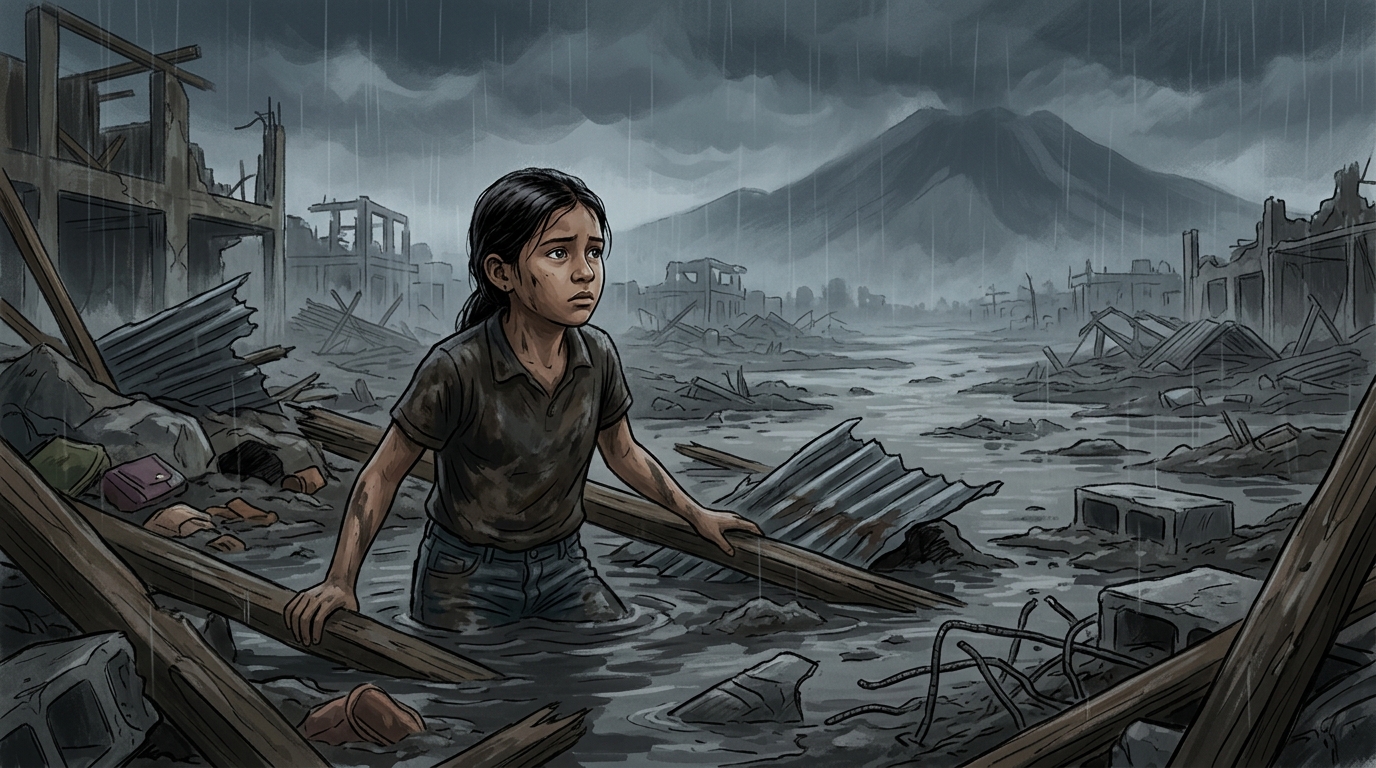
Omayra Sánchez: The 13-Year-Old Girl the World Could Not Save
On the night of November 13, 1985, a 13-year-old girl in Colombia became trapped beneath the ruins of her hometown. Her name was Omayra Sánchez.
Around her, an entire town had disappeared beneath mud, water, broken homes, and debris. Rescue workers could reach her. Journalists could speak to her. The world could eventually see her.
But no one could save her.
For nearly 60 hours, Omayra remained trapped in the aftermath of one of the deadliest volcanic disasters of the twentieth century. Her final days were photographed and reported around the world, turning one young girl into the most haunting symbol of the Armero tragedy.
But how did this happen?
And why, when people knew exactly where she was, could Omayra not be rescued?
The Night Armero Disappeared
The disaster began at the Nevado del Ruiz volcano in Colombia.
On November 13, 1985, the volcano erupted. The eruption itself was only the beginning of the catastrophe.
Hot volcanic material melted snow and ice near the summit, producing enormous lahars—fast-moving flows of water, mud, rocks, and volcanic debris. These destructive flows rushed down the river valleys toward communities below.
One of those flows reached the town of Armero.
Within minutes, much of the town was buried or swept away. USGS accounts estimate that about 23,000 people died in Armero, while the wider disaster killed more than 25,000 people. The tragedy later became a major lesson in volcanic-risk monitoring, warning systems, and emergency communication.
Somewhere beneath that devastation was Omayra.
Who Was Omayra Sánchez?
Before the disaster, Omayra was simply a young girl living in Armero.
Then, in a single night, her life became part of one of history’s most tragic disaster stories.
The lahar destroyed homes and buried entire neighborhoods. Omayra became trapped beneath the debris of what had once been her home and community.
Rescuers found her alive.
But saving her was far more difficult than simply pulling her from the mud.
The Girl Everyone Could See—but No One Could Free
For almost three days, Omayra remained trapped.
Rescue workers tried to help, but the situation was extremely dangerous. The debris around her was unstable, and rescuers lacked some of the equipment needed to safely remove her without causing further collapse or injury.
Photographer Frank Fournier arrived in Armero and documented her final hours. His photograph, later known as The Agony of Omayra, became one of the most famous images in the history of photojournalism. The POYi Archive records that Omayra died after roughly 60 hours of attempts to free her.
The image would eventually travel around the world.
And with it came an unbearable question:
Why could nobody save her?
A Disaster That Had Been Warned About
The tragedy of Armero was not simply a story of a volcano erupting without warning.
Scientists had been monitoring activity around Nevado del Ruiz, and areas vulnerable to lahars had been identified before the catastrophic eruption. However, warnings, uncertainty, communication failures, and delays in effective evacuation contributed to the disaster.
According to USGS accounts, the lahars reached Armero hours after the eruption began—meaning that, with faster and more effective warnings, evacuation to higher ground might have been possible.
That fact made Omayra’s death even more painful.
Her story became connected to a much larger question about responsibility.
Could this disaster have been prevented?
Perhaps not completely.
But could more lives have been saved?
The tragedy left many people believing that the answer was yes.
The Photograph That Shocked the World
Frank Fournier’s photograph of Omayra was not simply an image of a disaster.
It became a symbol.
A symbol of a child trapped in circumstances far beyond her control.
A symbol of a disaster that had destroyed an entire community.
And a symbol of the terrible consequences of inadequate disaster preparation.
The photograph received major international recognition and remains one of the most discussed examples of disaster photojournalism. World Press Photo describes the image as showing Omayra trapped in the debris while rescue workers waited for materials needed to reach her.
Yet the image also created a difficult ethical debate.
Should a photographer take such a photograph?
Or should the world be shown the reality of what happened?
For many, the photograph forced the world to confront a disaster that might otherwise have become only another number in a newspaper.
But behind the photograph was a real person.
A 13-year-old girl named Omayra Sánchez.
Could Omayra Have Been Saved?
This question has followed the story for decades.
Contemporary reporting reflected widespread anger and frustration over the lack of adequate rescue resources. A Colombian newspaper later described the painful feeling that Omayra might have survived, while also connecting her death to broader failures surrounding the disaster.
However, the situation at the disaster site was extremely complex.
Omayra was trapped in unstable debris, surrounded by water and destruction. Rescue operations across Armero were overwhelmed by the scale of the catastrophe, and thousands of people desperately needed help.
So the historical question is not as simple as saying that rescuers merely chose not to save her.
They did try.
But the disaster had created conditions in which rescue workers lacked the time, equipment, and resources needed for countless victims.
And Omayra became the most visible face of that failure.
The Legacy of a Girl the World Could Not Save
Omayra Sánchez died on November 16, 1985.
She was only 13 years old.
But her story did not end there.
The destruction of Armero changed the way many countries thought about volcanic disasters. In the aftermath, new efforts focused on improving volcano monitoring, communication, emergency planning, and international disaster assistance. The U.S. Volcano Disaster Assistance Program was established in 1986 in response to lessons from the Armero catastrophe.
Today, Omayra’s name remains inseparable from the tragedy.
But perhaps she should be remembered as more than the girl in a famous photograph.
She was a child.
A daughter.
A member of a community that disappeared in a single night.
And her story continues to ask the world a question that remains painfully relevant:
How many lives can be saved when warnings are heard—and how many are lost when they are not?
Explore More Roman History
If you enjoyed this story about the Omayra Sánchez , you can explore our other historical stories and discover more fascinating events from the world:
The Rosetta Stone: The Key That Unlocked Ancient Egypt
The Salem Witch Trials: When Fear Killed Innocent People
Shaanxi Earthquake of 1556: The Deadliest Earthquake in History
Click on any title above to continue exploring history and uncover more fascinating stories from the past.
[…] Omayra Sánchez: The Girl the World Couldn’t Save […]