
 By admin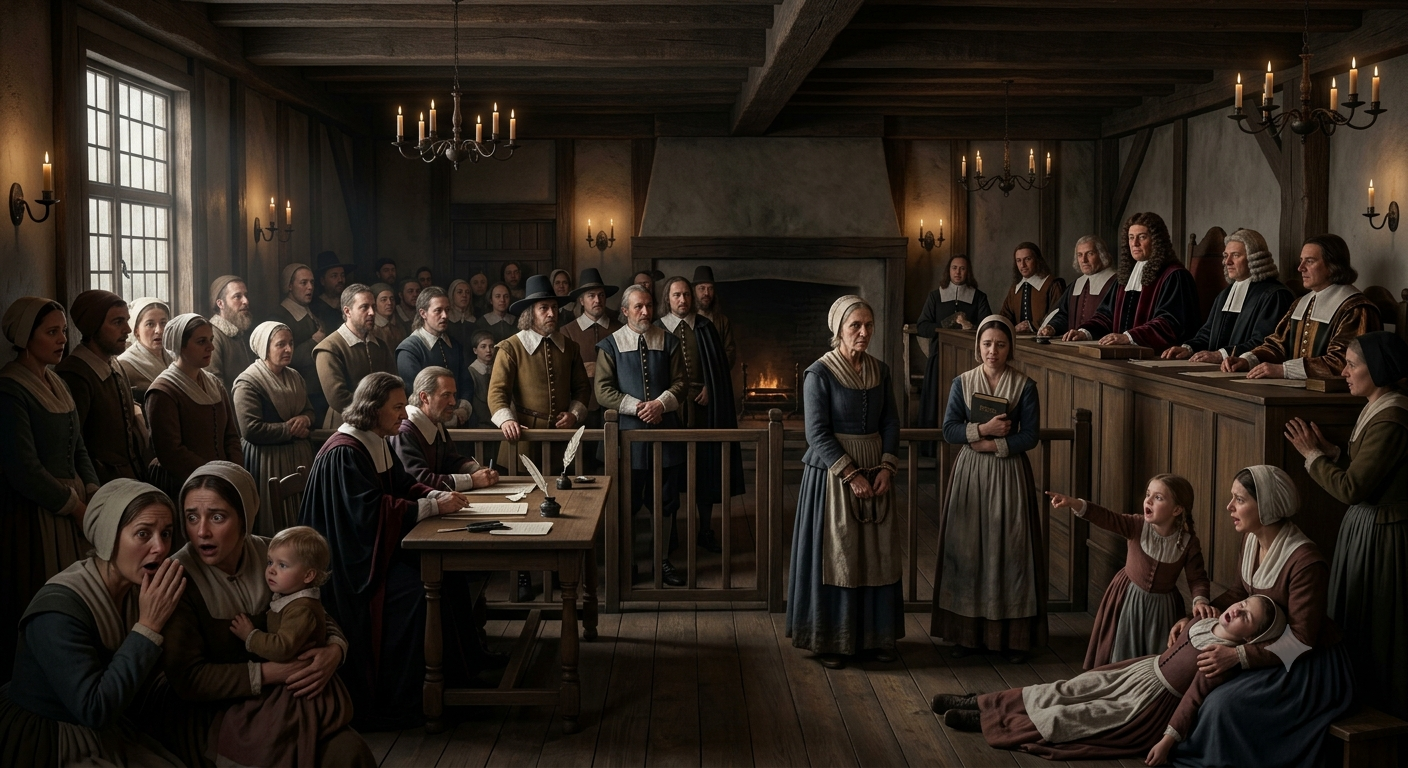
Introduction
The Salem Witch Trials remain one of the darkest and most shocking events in American history. In 1692, a small village called Salem was overwhelmed by fear, suspicion, and accusations that would change hundreds of lives forever.
It all began when a few young girls started behaving strangely. They screamed without warning, suffered violent fits, and claimed they were being attacked by witches. Their terrifying stories quickly spread through the village, and panic took over.
Soon, neighbors began accusing neighbors. Friends turned against friends, and even family members were suspected of practicing witchcraft. Fear replaced reason, and the search for witches became more important than finding the truth.
The consequences were heartbreaking.
More than 200 people were accused of witchcraft, and 20 innocent men and women lost their lives during the trials. Many others spent months in prison simply because someone claimed they were witches.
But what really happened in Salem?
Were witches truly responsible, or was the entire tragedy driven by fear, superstition, and false accusations?
Let’s uncover the true story behind The Salem Witch Trials, one of history’s most tragic miscarriages of justice.
How Did the Salem Witch Trials Begin?
The Salem Witch Trials began in January 1692 in Salem Village, a small Puritan community in the Massachusetts Bay Colony. At the time, religion played a central role in everyday life, and many people believed that the Devil could influence human beings through witchcraft.
The first signs of trouble appeared in the home of Reverend Samuel Parris. His nine-year-old daughter, Betty Parris, and his eleven-year-old niece, Abigail Williams, suddenly began acting in strange and frightening ways. They screamed without reason, threw themselves to the floor, and complained of invisible pains.
Local doctors examined the girls but could not find a medical explanation for their condition. With no clear answer, one doctor suggested that they might be suffering from witchcraft.
That single claim changed everything.
Soon, the girls began accusing other people in the village of using magic against them. The first three women accused were Tituba, an enslaved woman in the Parris household, Sarah Good, a poor beggar, and Sarah Osborne, an elderly woman who rarely attended church.
The accusations spread quickly throughout Salem. As fear grew, more people were arrested, and the small village became trapped in a wave of panic. What had started with a few frightened children was about to become one of the most tragic events in American history.
Why Did the Accusations Spread So Quickly?
As the Salem Witch Trials continued, fear spread faster than the truth. Once the first arrests were made, many people believed that witches were hiding everywhere. No one wanted to be accused, so suspicion quickly replaced trust.
The court accepted a type of evidence known as “spectral evidence.” This meant that if someone claimed they had seen another person’s spirit or ghost harming them in a dream or vision, the court sometimes treated it as real evidence.
Because of this, almost anyone could become a suspect.
Many accusations were based on rumors, personal arguments, or long-standing family disputes. Some people even accused their neighbors to settle old conflicts or protect themselves from suspicion.
As panic grew, the number of arrests increased. Wealthy landowners, respected church members, and ordinary farmers were all accused of witchcraft. No one was completely safe.
Life in Salem changed dramatically. People became afraid to speak openly or even trust their closest friends. A simple accusation could destroy a person’s reputation, separate families, and lead to imprisonment or even death.
The Salem Witch Trials had turned into a wave of mass fear, where emotions and superstition were stronger than facts or evidence.
The Trials and the Executions
As the Salem Witch Trials continued, the number of accused people kept growing. Special courts were created to hear the cases, and many innocent men and women were brought before judges with very little evidence against them.
Those accused faced a difficult choice.
If they confessed to being witches, they might be spared from execution but would still be sent to prison. If they insisted they were innocent, they often faced trial and the risk of being sentenced to death.
In June 1692, the first execution took place. Bridget Bishop became the first person hanged after being found guilty of witchcraft.
Over the following months, more executions followed.
By the time the trials ended, 19 people had been hanged, including both men and women. Another victim, Giles Corey, refused to enter a plea in court. Instead of receiving a normal trial, he was crushed to death under heavy stones, making his death one of the most tragic moments of the Salem Witch Trials.
Many others died in prison while waiting for their trials.
The executions shocked the community. Families were torn apart, innocent lives were lost, and fear continued to spread throughout Salem. Yet even as the tragedy grew worse, more people began to question whether justice was truly being served.
How Did the Salem Witch Trials End?
By the end of 1692, many people had begun to question the Salem Witch Trials. The accusations kept increasing, and even respected members of the community were being accused of witchcraft. It became clear that something was terribly wrong.
Religious leaders and government officials also started to express their concerns. They argued that the court was relying too heavily on spectral evidence, which could not be proven. As more innocent people suffered, public support for the trials began to disappear.
In October 1692, Governor William Phips took action. He ordered the special court handling the witchcraft cases to be closed and banned the use of spectral evidence in future trials.
Without this questionable evidence, most of the remaining cases quickly fell apart.
Many prisoners were released, and the executions came to an end. The wave of fear that had gripped Salem for months finally began to fade.
In the years that followed, several judges admitted they had made serious mistakes. Some of the people involved publicly apologized for their actions. The government later cleared the names of many victims and offered compensation to their families.
Today, the Salem Witch Trials are remembered as a painful lesson about the dangers of fear, false accusations, and unfair justice. What happened in Salem continues to remind the world why evidence, fairness, and the rule of law are so important.
What Do Historians Believe Today?
Today, historians agree that the Salem Witch Trials were not caused by real witchcraft. Instead, they believe the tragedy resulted from a combination of fear, religious beliefs, social tensions, and false accusations.
One popular theory suggests that the strange behavior of the young girls may have been caused by stress, fear, or psychological illness. Living in a strict Puritan society, surrounded by constant warnings about the Devil and evil spirits, may have influenced their actions.
Other historians point to personal conflicts within the community. Many families in Salem had disagreements over land, money, and power. Some accusations may have been driven by revenge or long-standing disputes rather than evidence.
There are also researchers who believe certain illnesses or environmental factors could have contributed to the strange symptoms. However, no single theory has been able to explain every detail of the Salem Witch Trials.
Despite years of research, one fact is clear.
The people who lost their lives were innocent victims of fear and injustice. Today, the Salem Witch Trials are studied around the world as an example of what can happen when panic, rumors, and prejudice replace evidence and fair justice.
More than 300 years later, the story continues to remind us how dangerous fear can become when people stop questioning what they believe to be true.
Conclusion
The Salem Witch Trials remain one of the darkest chapters in American history. What began with a few strange accusations quickly turned into a wave of fear that destroyed innocent lives and divided an entire community.
More than 200 people were accused of witchcraft, and 20 innocent victims lost their lives. Many others were imprisoned simply because of rumors, fear, and a lack of real evidence.
Today, historians agree that the Salem Witch Trials were not about witches at all. Instead, they were the result of panic, superstition, personal conflicts, and an unfair justice system.
The tragedy has become a powerful reminder of how dangerous false accusations can be when fear replaces reason.
Could something similar happen today?
Although modern laws and scientific knowledge make such events less likely, the story of Salem reminds us that fear, misinformation, and prejudice can still influence people’s decisions if they are not challenged.
More than 300 years later, the Salem Witch Trials continue to teach an important lesson: justice should always be based on facts, evidence, and fairness—not on fear or suspicion.