
 By admin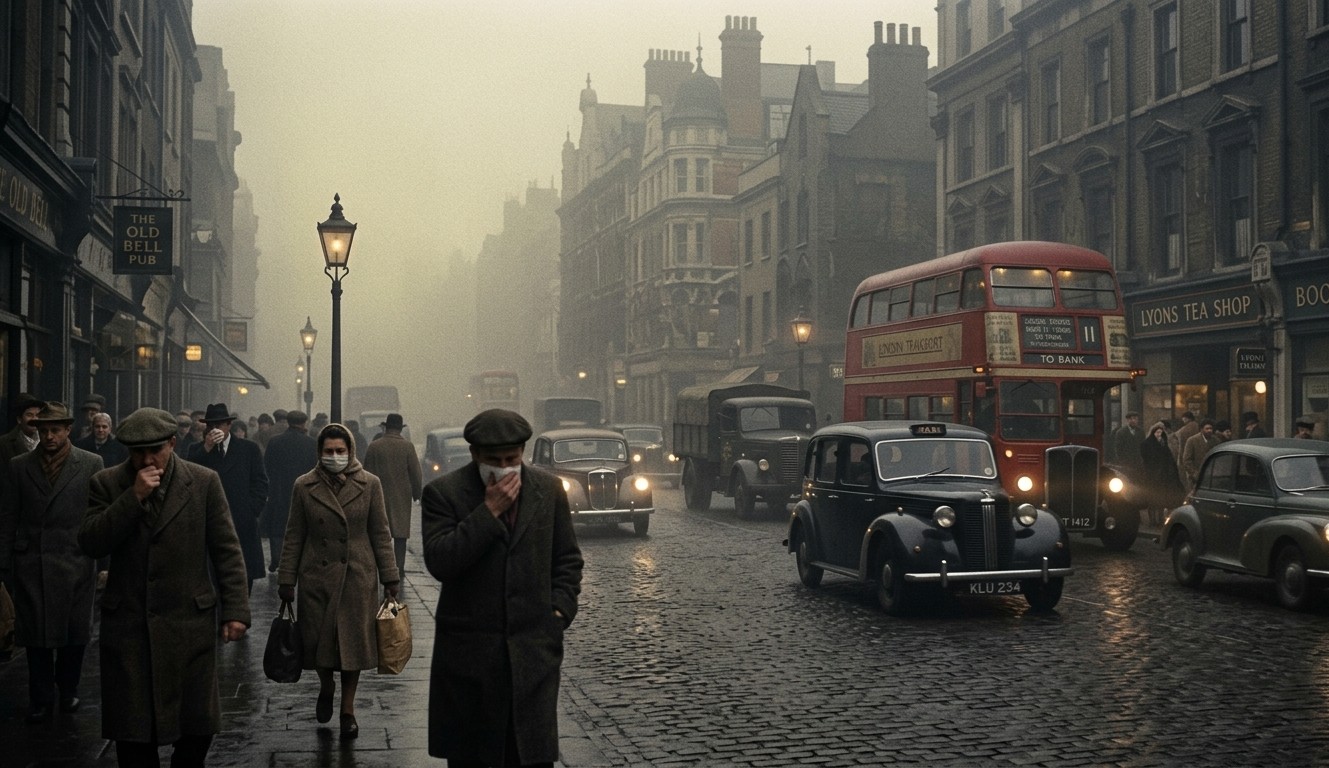
Introduction
Imagine waking up in London and finding the city covered in a thick yellow-gray fog. Streets were almost impossible to see, buses struggled to move, and people could barely breathe. This was the Great Smog of London, one of the most serious environmental disasters in British history.
What Was the Great Smog of London?
The Great Smog of London began in December 1952 and lasted for several days. London was already known for its winter fog, but this event was very different. The air became unusually thick and polluted, creating a dangerous layer over the city.
The smog was so dense that visibility in some areas fell to only a few meters. People could struggle to see even nearby buildings and vehicles.
At first, many people thought it was simply another heavy winter fog. They did not immediately realize how dangerous the air had become.
Why Did the Smog Become So Bad?
Several conditions came together to create the disaster.
December 1952 was extremely cold. Many homes and buildings depended on coal for heating. People burned large amounts of coal to stay warm.
London also had many factories and power stations that released smoke into the atmosphere.
Normally, wind would help move pollution away from a city. But during the Great Smog, the weather became unusually still.
A layer of cold air became trapped beneath warmer air above it. This is known as a temperature inversion.
Instead of rising and spreading out, smoke and pollution stayed close to the ground.
The result was a thick mixture of fog and dangerous air pollution.
Life in London During the Smog
As the smog became thicker, normal life in London began to break down.
People had difficulty walking through the streets because they could barely see. Drivers struggled to navigate roads, and public transportation was badly affected.
Some indoor events were also disrupted because the polluted air entered buildings.
The smog was especially dangerous for people with breathing problems. Hospitals began receiving more patients suffering from respiratory illnesses.
What made the situation even more frightening was that the danger was not always obvious. The thick air looked like fog, but it contained harmful pollution from coal smoke and other sources.
Why Was It So Dangerous?
The main problem was the combination of smoke, fog, and toxic air pollutants trapped close to the ground.
One major pollutant was sulfur dioxide, which came largely from burning coal. Other particles and chemicals were also present in the polluted air.
Breathing this air could make existing respiratory and heart problems much worse.
The effects did not disappear immediately after the sky became clearer. Researchers later found that deaths and illnesses remained unusually high during the weeks following the event.
How Many People Died?
The exact number of deaths caused by the Great Smog was not immediately understood.
Official estimates at the time reported thousands of deaths, but later research showed that the health impact was much larger.
Modern estimates commonly place the number of excess deaths at around 12,000, although the exact figure depends on how researchers define and measure the event’s effects.
This made the Great Smog one of the deadliest air-pollution events in modern British history.
What Did People Learn From the Disaster?
The disaster changed the way Britain thought about air pollution.
Before 1952, smoke from coal fires and factories was often considered a normal part of city life. The Great Smog showed that polluted air could become a serious threat to public health.
The event increased pressure on the British government to take action.
In response, the Clean Air Act of 1956 was introduced. It encouraged the use of cleaner fuels and created smoke-control areas where certain types of coal burning were restricted.
This became an important step in Britain’s efforts to reduce urban air pollution.
A Disaster That Changed London
The Great Smog of London was more than a strange weather event. It was the result of a dangerous combination of pollution, cold weather, and atmospheric conditions.
For several days, millions of people lived inside an invisible health crisis that they did not fully understand.
The event also showed how closely human health can be connected to the environment.
Today, London is very different from the city of 1952. Air pollution remains a concern, but modern environmental laws, cleaner energy sources, and better monitoring have greatly changed the way cities deal with air quality.
Conclusion
The Great Smog of London remains a powerful reminder of what can happen when pollution becomes trapped in the air people breathe.
What looked like an ordinary winter fog became a major public health disaster. Thousands of lives were lost, and the event helped change Britain’s approach to clean air.
The story of the Great Smog is therefore not only about a strange few days in London. It is also about how one disaster forced a city and a country to rethink the relationship between industry, pollution, and human health.
[…] farmers, this was more than strange weather. Their crops depended on warm temperatures and sunlight. When the weather stayed cold and wet, growing food became extremely […]