
 By admin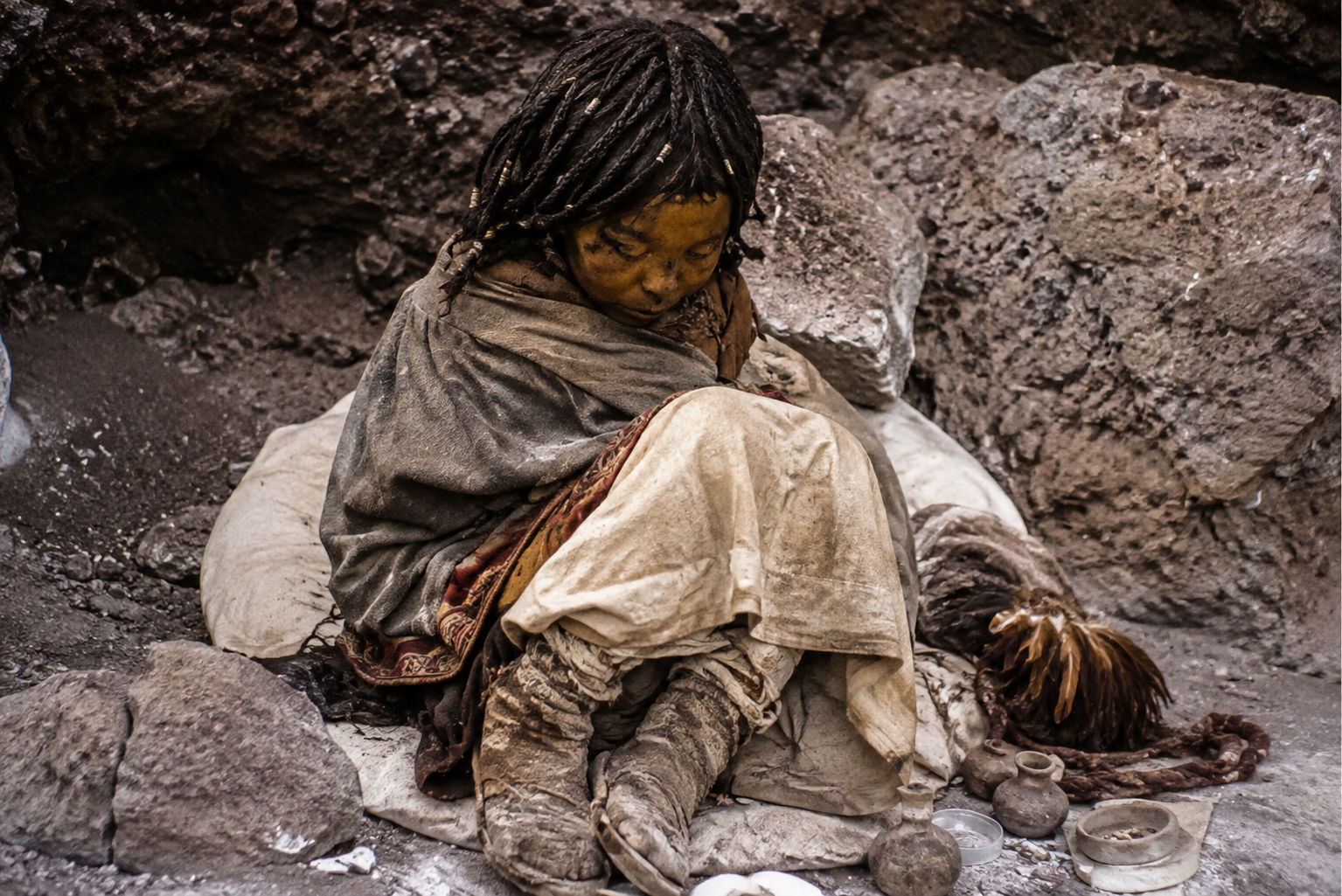
Introduction
The Children of Llullaillaco are among the most remarkable archaeological discoveries ever made in South America. More than 500 years ago, three Inca children were taken high into the Andes and placed near the summit of Mount Llullaillaco, a volcano on the border of Argentina and Chile. Their bodies remained remarkably preserved for centuries because of the freezing, dry conditions of the mountain. But why were these children taken so far from their homes—and what happened to them?
Their story provides a rare and haunting glimpse into the beliefs, rituals, and political world of the Inca Empire.
Who Were the Children of Llullaillaco?
The three children are commonly known as the Llullaillaco mummies. Archaeologists discovered them in 1999 at an elevation of more than 6,700 meters above sea level.
The group consisted of:
A teenage girl, often called the Maiden
A younger boy, known as the Llullaillaco Boy
A younger girl, often called the Lightning Girl
They were remarkably well preserved. Their clothing, hair, footwear, and other objects found with them survived because of the extreme cold and dry environment.
Unlike ordinary burials, their location and the objects surrounding them indicated that the children had been part of an important ceremonial event.
The Inca Empire and Sacrificial Rituals
To understand their story, we need to understand the world of the Inca Empire.
The Inca ruled a vast territory across western South America during the centuries before the arrival of the Spanish. Their empire stretched through parts of modern-day Peru, Bolivia, Ecuador, Chile, Argentina, and Colombia.
Religion played a central role in Inca society. Mountains were considered sacred places, and the Inca believed that powerful supernatural forces were connected to the natural world.
One important ceremony was known as Capacocha, or Qhapaq Hucha.
The ceremony appears to have involved offerings to important deities and sacred places. In some cases, children were selected as offerings. Archaeological evidence suggests that these ceremonies could have been connected to major political or religious events.
The children found on Llullaillaco appear to have been associated with such a ritual.
Why Were Children Chosen?
One of the most disturbing questions surrounding the discovery is why children were selected.
Researchers believe that the Inca may have considered certain children especially valuable for religious ceremonies. Their youth, physical appearance, family background, and social status may have played a role in their selection.
The children were not necessarily treated as ordinary victims before the ceremony. Evidence suggests that they may have been prepared carefully and given special clothing and valuable objects.
This makes the story more complicated than simply describing them as victims of a ritual. They were children caught within a religious and political system that viewed the ceremony very differently from how we understand it today.
A Journey Into the Andes
Imagine traveling hundreds of years into the past.
The children were taken on a difficult journey through the Andes, eventually reaching the enormous height of Mount Llullaillaco.
The journey itself would have been extraordinary. The mountain rises more than 6,700 meters above sea level, where the air is extremely thin and temperatures can become dangerously cold.
The children were dressed in fine clothing and accompanied by objects that reflected their importance.
Among the discoveries were textiles, footwear, pottery, food remains, and miniature figures.
These objects have helped archaeologists understand not only the ritual itself but also aspects of Inca craftsmanship, trade, and religious beliefs.
The Mysterious Maiden
The oldest of the three children is a teenage girl known as the Maiden.
She was found sitting in a small burial chamber, wearing carefully arranged clothing.
Scientists have conducted extensive studies on her remains. Her hair has been particularly valuable because it can preserve chemical evidence from the final months of a person’s life.
Research into the Maiden’s hair has provided clues about changes in her diet and lifestyle before her death.
These findings suggest that something significant happened to her during the period leading up to the ceremony.
The Llullaillaco Boy
The younger boy was found with his body positioned differently from the Maiden.
He was wearing clothing associated with the Inca world and was accompanied by several objects.
Researchers have studied his remains to understand his health, diet, and possible circumstances before his death.
His discovery also demonstrates how carefully the ritual burial was organized.
The placement of the children, their clothing, and the objects around them were not random.
The Lightning Girl
The youngest child is often called the Lightning Girl.
Her nickname comes from the appearance of her preserved body, which showed evidence of changes that may have occurred after burial.
Like the other children, she was placed in a carefully prepared burial setting.
Her remains have helped researchers investigate the lives of children living under the Inca Empire and the circumstances surrounding Capacocha ceremonies.
How Were They Preserved for So Long?
Perhaps the most astonishing part of the discovery is the condition of the bodies.
The summit of Llullaillaco is extremely cold, dry, and oxygen-poor. These conditions created a natural form of preservation.
Instead of decomposing rapidly, the children’s bodies were naturally freeze-dried.
Their hair, skin, clothing, and even some internal biological evidence survived remarkably well.
This natural preservation allowed scientists to study details that would normally disappear after hundreds of years.
In many ways, the mountain itself became a frozen time capsule.
What Did Scientists Discover?
Modern scientific techniques have revealed surprising information about the children.
Researchers have examined their hair, teeth, bones, and other biological material to investigate their diet, health, ancestry, and final months.
One important discovery involved changes in their diet.
Chemical analysis of hair can provide clues about what a person consumed over time. Researchers found evidence suggesting that the children’s diets changed during the months before their deaths.
This may indicate that they were given foods associated with higher social status or ceremonial preparation.
The evidence has helped scientists reconstruct parts of their final journey without relying solely on written historical accounts.
What Happened to the Children?
The exact circumstances of their deaths cannot be known with absolute certainty.
However, researchers believe the children were placed on the mountain as part of a Capacocha ceremony and died there.
The extreme cold would have played an important role in their preservation.
There is no need to imagine a dramatic scene at the summit. The archaeological evidence suggests a carefully organized ritual rather than an uncontrolled event.
The precise details remain uncertain—and that uncertainty is one reason the discovery continues to fascinate historians and archaeologists.
Why Is the Discovery Important?
The Children of Llullaillaco are important because they provide an unusually detailed look into Inca society.
Most archaeological evidence from ancient civilizations consists of buildings, pottery, tools, weapons, or fragments of human remains.
Here, researchers found exceptionally preserved individuals together with clothing and ceremonial objects.
This allows scientists to investigate questions about:
- Inca religion
- Ancient diets
- Social status
- Clothing and textiles
- Childhood in the Inca Empire
- Long-distance travel
- Religious ceremonies
- The relationship between politics and religion
The discovery therefore tells us much more than the story of three children.
It reveals how a powerful civilization understood life, death, nature, and the sacred world.
A Mystery That Still Remains
Even after decades of research, many questions remain unanswered.
Who exactly were these children?
Why were they chosen?
How far did they travel before reaching the mountain?
What did their families believe about the ceremony?
And what did the children themselves understand about the journey?
Archaeology can provide clues, but it cannot answer every question.
The children lived more than five centuries ago, and much of their personal story disappeared with them.
What remains is a remarkable archaeological record—and a reminder that behind every ancient discovery were real human lives.
The Legacy of the Llullaillaco Mummies
Today, the Llullaillaco mummies are considered some of the most significant archaeological remains connected to the Inca world.
Their discovery changed researchers’ understanding of Capacocha and provided an extraordinary opportunity to study the lives of people who lived during the final centuries of the Inca Empire.
At the same time, their story raises important ethical questions about the study and display of human remains.
The children were once living people with families, identities, and their own lives. Their remains therefore need to be treated with respect, even as scientists continue learning from them.
Conclusion
The story of the Children of Llullaillaco is not simply a story about ancient sacrifice. It is a story about religion, power, childhood, and a civilization that saw the mountains as part of a sacred world.
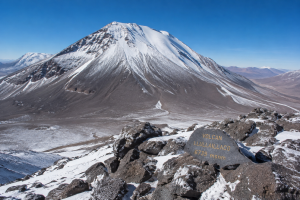
High above the Andes, three children were placed in a ceremonial burial more than 500 years ago. The cold mountain preserved their remains almost like a message from the past.
And perhaps the most haunting question is not simply how they died—
but who they were before that final journey began.
[…] 1.43-million-year-old footprints discovered near Lake Turkana in Kenya offer an extraordinary glimpse into the distant past. Long before modern humans appeared, ancient human relatives walked across […]
[…] – The Child of Llullaillaco […]