
 By admin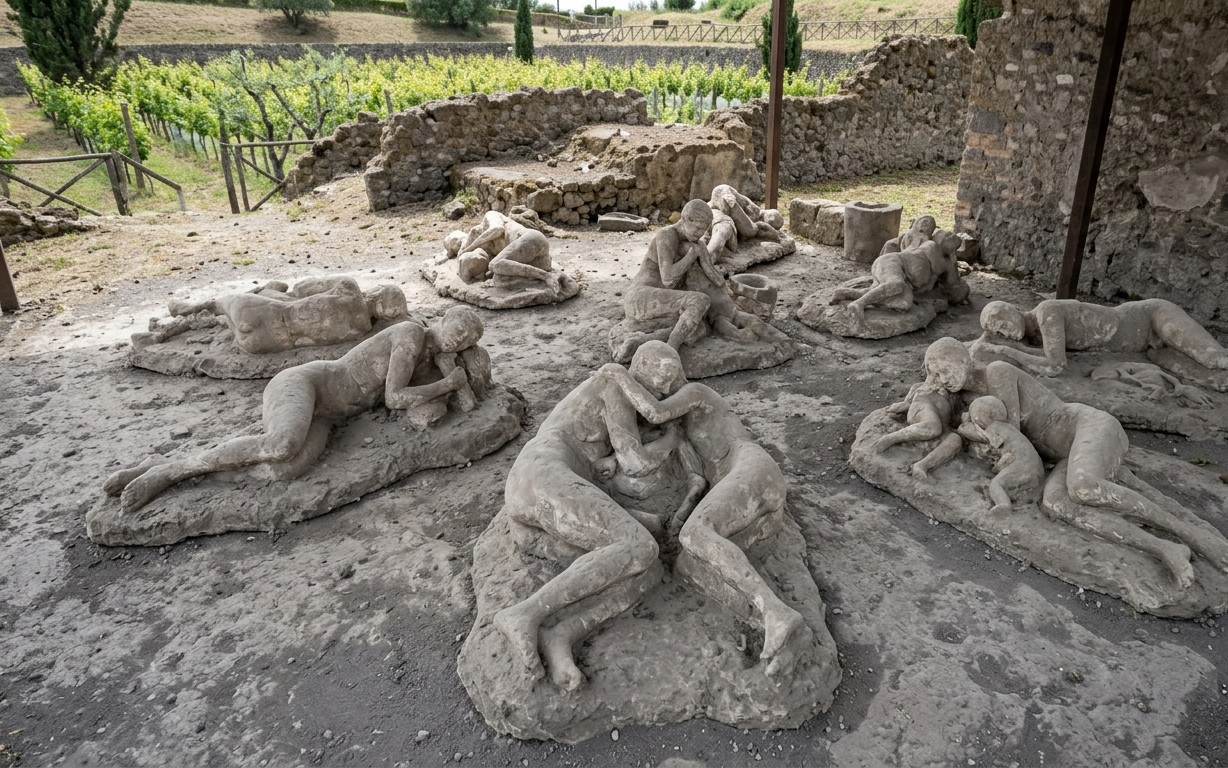
Introduction
Imagine walking through an ancient Roman city where houses, shops, streets, and even everyday objects have remained almost exactly where people left them nearly 2,000 years ago.
This is Pompeii—a remarkable ancient city buried beneath volcanic ash after the catastrophic eruption of Mount Vesuvius in 79 CE.
For centuries, Pompeii remained hidden underground. When archaeologists began uncovering the city, they discovered remarkably preserved buildings, colorful wall paintings, mosaics, public baths, shops, temples, and countless objects that revealed how ordinary Romans lived.
The eruption happened suddenly, giving many residents little time to escape. Ash and volcanic debris eventually buried the city, preserving parts of it for centuries.
But what exactly happened that terrible day?
Why couldn’t so many people escape?
And how did Pompeii survive beneath the ground for almost 2,000 years?
In this article, we’ll uncover the fascinating story of Pompeii, the ancient Roman city that was destroyed by a volcano but became one of the most valuable archaeological discoveries in history.
Pompeii Before the Eruption
Before the disaster, Pompeii was a lively and prosperous Roman city near the Bay of Naples in southern Italy. It was home to thousands of people and served as an important center for trade, agriculture, and tourism.
The city’s location made it particularly valuable. Its fertile volcanic soil was excellent for growing grapes, olives, and other crops, while its position near the sea allowed merchants to trade with other parts of the Roman world.
Pompeii was not simply a farming town. It had impressive villas, temples, public baths, theaters, bakeries, restaurants, shops, and marketplaces. Wealthy residents decorated their homes with colorful frescoes and intricate mosaics, while ordinary people worked as farmers, craftsmen, merchants, and laborers.
The city also had a lively social and cultural life. People gathered in public spaces, visited baths, watched performances at theaters, and bought food from small shops and street-side establishments.
But there was a danger nearby that most residents did not fully understand.
Mount Vesuvius, the volcano overlooking the region, appeared quiet. Few people realized that beneath the peaceful landscape, enormous forces were building underground.
In 79 CE, that seemingly peaceful volcano would suddenly erupt—and Pompeii would be changed forever.
The Eruption of Mount Vesuvius
On a day in 79 CE, the peaceful life of Pompeii suddenly came to an end. Mount Vesuvius erupted with enormous force, sending a massive column of ash, pumice, and volcanic gases high into the sky.
At first, many residents may not have understood the seriousness of what was happening. Pumice stones began falling over the city, covering streets and rooftops. Some people attempted to escape while others stayed inside their homes, hoping the eruption would soon end.
But the situation became increasingly dangerous.
As the eruption continued, layers of volcanic material accumulated throughout Pompeii. Roofs began collapsing under the weight, streets became difficult to cross, and the air filled with ash and toxic gases.
The eruption eventually produced pyroclastic flows—extremely hot mixtures of gas, ash, and volcanic debris that rushed down the slopes of Vesuvius at tremendous speed. These deadly flows overwhelmed parts of Pompeii and nearby settlements.
Within hours, much of the city was buried beneath meters of volcanic material.
For the people who survived, there was almost no way to know whether it was safe to return. For those who remained trapped, the disaster became fatal.
Pompeii had been transformed from a busy Roman city into a buried city hidden beneath the volcanic ash.
Why Couldn’t the People of Pompeii Escape?
The eruption of Mount Vesuvius was especially deadly because it happened suddenly and developed into several dangerous stages. Many residents may have initially believed that the falling pumice and ash would eventually stop, giving them little reason to realize how serious the situation had become.
Some people did try to flee the city. However, thick layers of volcanic debris quickly made roads difficult to use. Ash filled the air, buildings collapsed, and darkness covered the streets even during the daytime.
The most deadly phase came when pyroclastic flows reached the city. These fast-moving clouds of extremely hot gas, ash, and volcanic material could kill people within moments. There was virtually no way for anyone caught directly in their path to escape.
Archaeologists later discovered human remains throughout Pompeii. Some victims were found inside houses, while others were discovered in streets or public buildings. Their remains provide heartbreaking evidence of how suddenly the disaster unfolded.
The tragedy was not simply that Pompeii was destroyed—it was that an ordinary Roman population was caught in a disaster they had never experienced before. Their final moments were preserved beneath layers of volcanic material, allowing modern researchers to reconstruct parts of what happened nearly 2,000 years ago.
How Was Pompeii Preserved?
One of the most remarkable things about Pompeii is how much of the ancient city survived. When Mount Vesuvius erupted, layers of ash and volcanic material gradually buried buildings, streets, homes, and everyday objects.
Instead of being exposed to centuries of weather and human activity, many parts of Pompeii remained sealed underground. This unusual burial helped protect frescoes, mosaics, pottery, tools, furniture, and inscriptions that would otherwise have disappeared.
Archaeologists have even discovered the remains of loaves of bread, food containers, and household objects. These ordinary items provide valuable clues about what people ate, bought, sold, and used in their daily lives.
The volcanic material also preserved the outlines of some victims. When archaeologists later discovered empty spaces where bodies had decomposed, they developed a technique of filling these cavities with plaster. The resulting casts revealed the positions and final moments of some of Pompeii’s inhabitants.
Because of this extraordinary preservation, Pompeii is much more than a collection of ancient ruins. It is like a time capsule, giving historians an unusually detailed glimpse into everyday Roman life nearly 2,000 years ago.
What Did Archaeologists Discover in Pompeii?
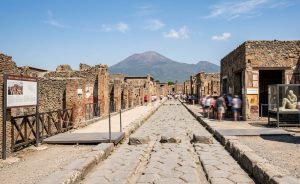
When archaeologists began uncovering Pompeii, they discovered far more than the remains of buildings. They found an entire Roman city preserved beneath the volcanic layers, offering an extraordinary glimpse into everyday life nearly 2,000 years ago.
Excavations revealed houses, bakeries, shops, temples, public baths, theaters, gardens, and streets. Many buildings still contained colorful wall paintings and detailed mosaics. Some homes even preserved furniture and household objects, showing how different social classes lived.
Archaeologists also discovered thousands of inscriptions and graffiti written on walls. These messages included advertisements, political slogans, personal comments, and even jokes. Together, they provide valuable evidence about the language, politics, and social life of ordinary Romans.
One particularly fascinating discovery was the large number of shops and food establishments found throughout the city. Counters, storage containers, ovens, and cooking equipment suggest that residents could easily buy prepared food and drinks.
Perhaps the most emotional discoveries were the plaster casts of victims. These casts captured the shapes and positions of people who died during the eruption, giving researchers a haunting picture of the human cost of the disaster.
Every discovery continues to reveal another part of Pompeii’s story, making the ancient city one of the world’s most important archaeological sites.
The Rediscovery of Pompeii
Although Pompeii was buried in 79 CE, the city was not completely forgotten. Over the centuries, people knew that an ancient settlement had once existed in the area, but much of the city remained hidden beneath layers of volcanic material.
Small-scale digging took place during the 16th century, but serious archaeological exploration began in 1748 under the Bourbon rulers of Naples. Excavators gradually uncovered streets, houses, temples, paintings, and other remains that had been remarkably preserved underground.
At first, some excavations focused heavily on finding valuable objects and artwork. Over time, however, archaeologists became increasingly interested in preserving the entire city and understanding how its inhabitants had lived.
As more of Pompeii was uncovered, researchers realized that they had found something extraordinary: an ancient Roman city preserved almost like a snapshot of a single moment in history.
Today, excavations and conservation work continue. Archaeologists use modern technology, including 3D scanning, digital mapping, and advanced imaging, to study Pompeii while protecting its fragile remains.
The rediscovery of Pompeii transformed our understanding of Roman daily life and turned the buried city into one of the world’s most famous archaeological sites.
The Legacy of Pompeii
The discovery of Pompeii has given historians an extraordinary opportunity to understand how ordinary Romans lived nearly 2,000 years ago. Unlike many ancient cities, Pompeii preserved details of everyday life that are rarely found elsewhere.
Its streets, homes, shops, public baths, theaters, temples, and colorful artwork reveal how people worked, socialized, worshipped, and spent their free time. Even simple objects such as cooking tools, pottery, and food containers have helped researchers reconstruct aspects of Roman daily life.
Pompeii has also taught scientists more about volcanic disasters. The layers of ash and volcanic debris provide important evidence about how Mount Vesuvius erupted and how quickly dangerous volcanic flows could overwhelm nearby communities.
Today, Pompeii is one of the world’s most important archaeological sites. Millions of visitors are fascinated by its remarkably preserved streets and buildings, while archaeologists continue to study and protect the ancient city.
The tragedy that buried Pompeii also preserved a unique window into the past. Its ruins remind us that behind every ancient monument were ordinary people with homes, families, jobs, hopes, and dreams. That human story is what makes Pompeii more than just an archaeological site—it is a frozen moment of Roman history.
Conclusion
The story of Pompeii is one of the most extraordinary tragedies in ancient history. In 79 CE, the eruption of Mount Vesuvius destroyed the city and buried it beneath layers of ash and volcanic debris.
Yet the same disaster that destroyed Pompeii also preserved it. Homes, streets, paintings, shops, tools, and everyday objects survived underground for centuries, allowing modern researchers to see how people lived during the Roman era.
Today, Pompeii stands as a remarkable time capsule of ancient Rome. Its ruins continue to reveal new details about Roman society, culture, architecture, and everyday life.
The city reminds us that history is not only about emperors and great battles. Sometimes, the most powerful stories come from ordinary people whose lives were suddenly interrupted—and whose world was preserved for future generations to discover.
[…] admin Aug 8, 2026 […]