
 By admin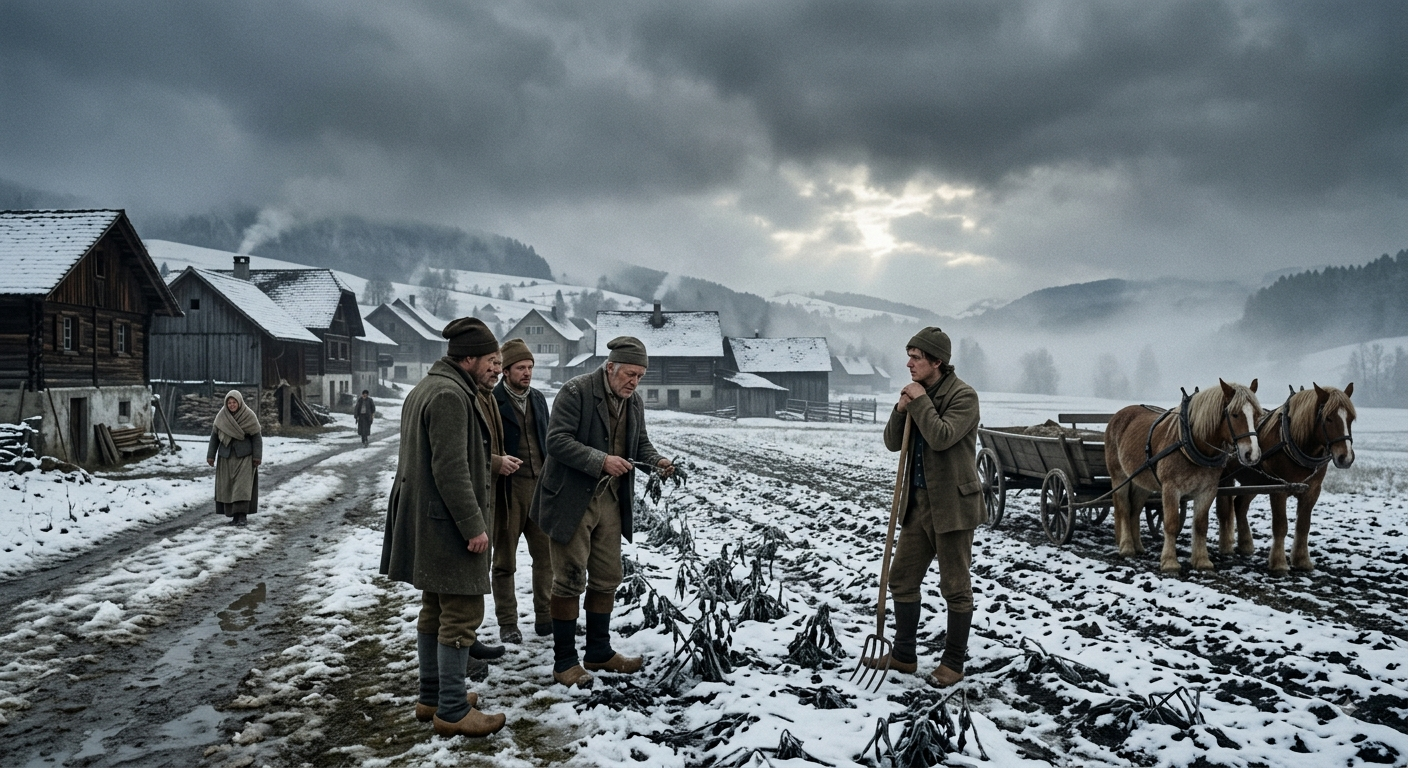
Introduction
Imagine waking up in June and seeing snow outside your window. Farmers look at their fields and realize that their crops are dying, while summer temperatures feel more like winter. This sounds impossible, but it really happened. The Year Without a Summer was the name later given to 1816, when unusual cold, frost, snow, and heavy rain affected large parts of the Northern Hemisphere.
A Summer That Never Felt Like Summer
People in 1816 expected the normal arrival of warm summer weather. Instead, many places experienced strange and dangerous conditions.
In parts of the northeastern United States, temperatures suddenly dropped during the summer. Frost damaged crops, and snow was reported even during June. Europe also experienced unusually cold and wet weather.
For farmers, this was more than strange weather. Their crops depended on warm temperatures and sunlight. When the weather stayed cold and wet, growing food became extremely difficult.
The situation soon became a serious food problem.
What Caused the Year Without a Summer?
The main cause was a huge volcanic eruption that had happened the year before.
On April 10, 1815, Mount Tambora erupted on the island of Sumbawa in what is now Indonesia. The eruption was enormous and sent large amounts of volcanic material high into the atmosphere.
Some of the lighter particles and gases reached the stratosphere. There, they spread widely around the Earth and reduced the amount of sunlight reaching the surface. This changed weather patterns and contributed to the unusually cold conditions of 1816.
People living in 1816 did not know this was happening.
They had no modern satellites, climate models, or instruments that could explain how a volcanic eruption thousands of kilometers away could affect their weather.
To them, the strange summer seemed almost impossible to explain.
Snow in the Middle of Summer
One of the strangest parts of the Year Without a Summer was the appearance of snow and frost during months that were normally warm.
In parts of North America, summer temperatures fell so sharply that crops were damaged or completely destroyed. Some areas experienced snow in June, while repeated frosts killed plants that farmers had already planted.
Imagine preparing your fields for summer, only to watch frost destroy your crops.
For farming communities, there was little they could do.
The problem was not limited to one cold day. The unusual weather continued through much of the growing season.
Europe Faces Food Shortages
Europe was also badly affected.
The continent had already suffered years of war and economic problems following the Napoleonic Wars. The unusual weather made the situation even worse.
Heavy rain, cold temperatures, and poor growing conditions damaged crops in several regions. Food became more expensive, and poor families were especially vulnerable.
In some areas, food shortages contributed to unrest and hardship. The effects of the unusual climate were therefore not simply environmental—they also affected society, trade, and the economy.
Why Did People Think Something Was Wrong With the Weather?
People in the early 19th century had no clear scientific explanation for what they were experiencing.
The sky could look unusual, sunlight could appear weaker, and temperatures could suddenly become much colder.
Without modern climate science, people had to understand these events using the knowledge and beliefs available to them at the time.
Some saw the strange weather as a sign of divine punishment or a warning. Others simply feared that something unusual was happening to nature.
Today, scientists can connect the event to the effects of the massive Mount Tambora eruption.
The Human Cost
The biggest problem created by the strange weather was food.
When crops failed, people had less food to eat and less grain to sell. Prices increased, making life especially difficult for poor families.
Farmers also had to worry about animals. If crops and grass failed, there was less food available for livestock.
This created a chain reaction:
Cold weather → crop failure → food shortages → higher prices → hunger and social hardship.
The crisis affected different regions in different ways, but the Northern Hemisphere experienced some of the most important impacts.
The Strange Connection to Frankenstein

The Year Without a Summer also had an unexpected connection with literature.
In 1816, the weather around Lake Geneva in Switzerland was unusually cold and rainy. A group of writers, including Mary Shelley and Lord Byron, spent much of their time indoors because of the poor weather.
During this period, the group became interested in telling ghost stories.
This gloomy atmosphere helped inspire Mary Shelley’s famous novel Frankenstein.
So, one of the world’s most famous horror stories was partly connected to a summer that felt nothing like summer.
How Long Did the Effects Last?
The unusual climate conditions were not simply a one-day event.
The effects of the 1815 eruption continued into the following years, although the most famous period was 1816. The eruption disrupted climate patterns and affected weather across large areas.
The exact effects were different from place to place. Some regions experienced colder temperatures, while others suffered from heavy rain or other unusual weather.
Scientists today study historical records, tree rings, climate data, and other evidence to understand how the eruption affected different parts of the world.
A Volcano That Changed the World
The Year Without a Summer is a remarkable example of how one natural event can affect people thousands of kilometers away.
A volcano erupted in Indonesia in 1815. Months later, communities in North America and Europe were dealing with strange summer weather, failed crops, rising food prices, and hunger.
People in 1816 could not see the connection.
Today, however, scientists understand much more about how large volcanic eruptions can affect the atmosphere and climate.
The story reminds us that Earth’s natural systems are deeply connected.
Conclusion
The Year Without a Summer was one of the strangest climate events in modern history. In 1816, summer disappeared for many communities behind cold temperatures, frost, snow, rain, and poor harvests.
The disaster began with an enormous volcanic eruption at Mount Tambora in Indonesia in 1815. Its effects reached far beyond the volcano itself, influencing weather, agriculture, food supplies, and human society.
And perhaps the strangest part is that the same dark and rainy summer that caused so much suffering also helped inspire Frankenstein, one of the most famous novels ever written.
Sometimes, history creates stories that sound impossible—but really happened.
[…] cold January afternoon when suddenly a huge wave of dark, sticky liquid rushes through the streets. Buildings shake, vehicles are pushed aside, and people have almost no time to escape. This was the Great […]
[…] of years ago, rivers were not only sources of water. They were also the main roads of the ancient world. People used rivers to move goods, travel between settlements, and connect different […]
[…] Religion played a central role in Inca society. Mountains were considered sacred places, and the Inca believed that powerful supernatural forces were connected to the natural world. […]