
 By admin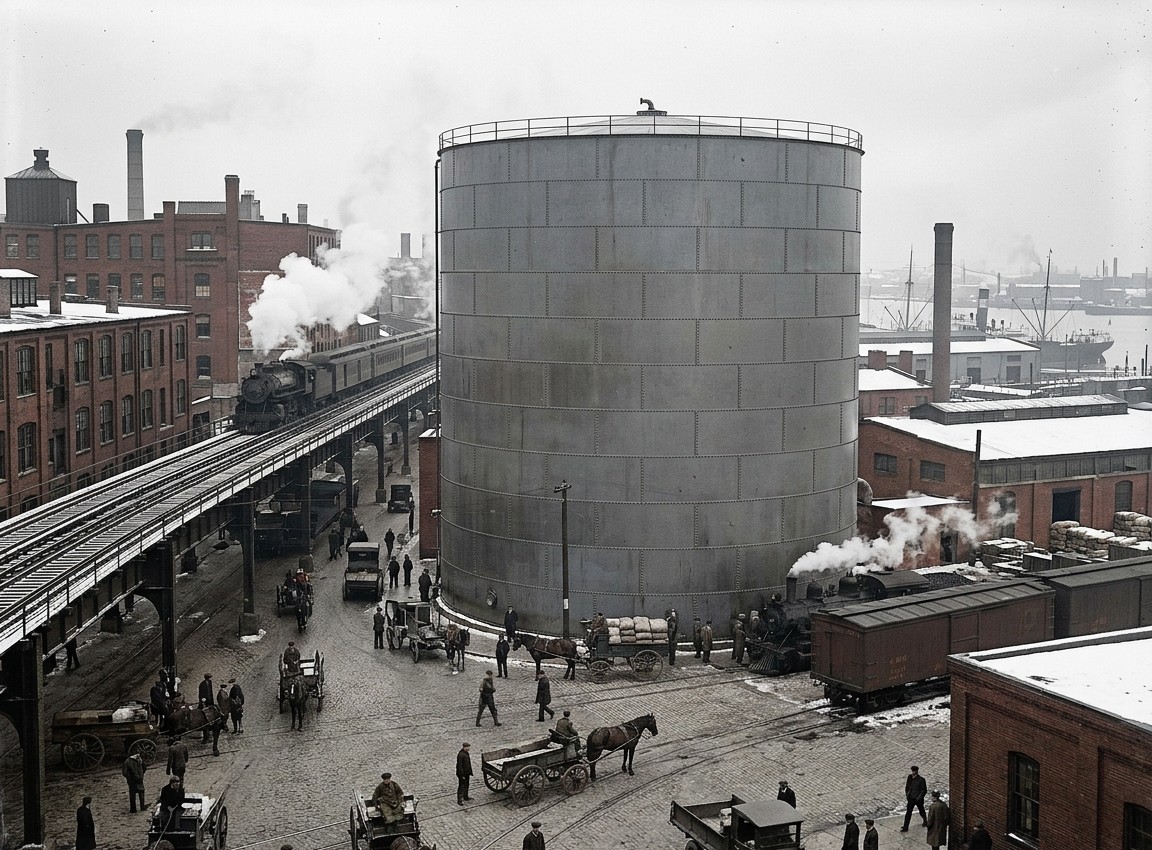
Introduction
Imagine walking through Boston on a cold January afternoon when suddenly a huge wave of dark, sticky liquid rushes through the streets. Buildings shake, vehicles are pushed aside, and people have almost no time to escape. This was the Great Molasses Flood, one of the strangest and most destructive industrial disasters in American history.
What Was the Great Molasses Flood?
The disaster happened on January 15, 1919, in Boston, Massachusetts.
At the time, molasses was an important commercial product. It was used to make foods, alcohol, and other products.
Near Boston’s waterfront stood a huge steel storage tank belonging to the Purity Distilling Company. The tank was about 50 feet tall and 90 feet wide and could hold more than two million gallons of molasses.
On that January afternoon, something went terribly wrong.
The enormous tank suddenly burst open.
Millions of gallons of molasses escaped at once and created a powerful wave that rushed through the nearby streets.
A Normal Afternoon Turns Into a Disaster
It was around lunchtime when the tank failed.
People nearby suddenly heard a tremendous sound as the steel structure broke apart.
A massive wave of molasses moved through the area at incredible speed.
The sticky liquid was several feet high in some places and spread across the streets.
People, horses, vehicles, and buildings were caught in its path.
Because molasses is extremely thick and heavy, escaping from such a huge tank created enormous force.
People who were close to the tank had almost no time to react.
Why Was Molasses So Dangerous?
Molasses may sound harmless. After all, it is a sweet food product.
But a huge amount of molasses can be extremely dangerous.
Molasses is much thicker than water and has a high density. When millions of gallons are stored inside a large tank, they create enormous pressure on the tank walls.
Once the tank broke, gravity pulled the molasses outward and downward.
The result was a fast-moving wave of heavy liquid.
The molasses also became harder to move through because it was thick and sticky. People caught inside it could struggle to escape.
The Streets Became a Sea of Molasses
The disaster quickly transformed the neighborhood.
Molasses covered streets, buildings, railway tracks, and other structures.
Some buildings were damaged or destroyed by the force of the flood.
Vehicles were pushed around, and debris became mixed with the sticky liquid.
Rescue workers faced a difficult situation because walking through the molasses was extremely difficult.
The cold January weather also made the cleanup harder.
As the molasses cooled, it became even thicker.
The Human Cost
The flood was deadly.
21 people died and around 150 people were injured.
Many of the victims were workers and local residents who happened to be near the tank when it collapsed.
Rescuers worked for hours to search through the thick molasses and debris.
The disaster shocked Boston because few people could have imagined that a storage tank filled with molasses could cause such destruction.
What Caused the Tank to Burst?
After the disaster, an important question had to be answered:
Why did the tank fail?
The tank had been built only a few years earlier, but investigators found serious problems with its construction.
The steel walls were considered too thin for the enormous pressure they had to contain.
There were also concerns about the quality of the tank’s construction and testing.
Another possible factor was temperature.
The weather had been unusually warm shortly before the disaster. Warmer temperatures can make molasses less viscous, allowing it to move more easily.
However, the exact combination of factors that caused the tank to fail became the subject of a major investigation.
The Legal Battle
The disaster did not end when the molasses stopped flowing.
Families of the victims and injured people wanted answers.
A large legal case followed.
The tank’s owners initially argued that the disaster had been caused by sabotage.
However, investigators and engineers examined the evidence carefully.
The court eventually found the company responsible for the disaster.
The case became important in American legal history because it showed how engineering evidence and expert testimony could be used to determine responsibility after an industrial accident.
How Long Did the Cleanup Take?
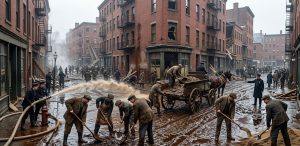
Cleaning Boston after the flood was not easy.
Molasses covered streets, buildings, vehicles, and other surfaces.
Workers used water, sand, sawdust, and other materials to remove the sticky substance.
The cleanup continued for weeks.
The molasses was carried to many parts of Boston on people’s shoes, clothing, and vehicles.
This made the disaster’s effects much more widespread than the original flood area.
How Did the Disaster Change Safety Rules?
The Great Molasses Flood had an important effect beyond Boston.
The disaster increased public attention toward the safety of large industrial structures.
Engineers and authorities became more concerned about proper design, construction, inspection, and testing.
The event became an important example of why large storage tanks cannot simply be built cheaply and quickly.
Industrial structures must be designed to handle the forces placed on them.
Why Is the Great Molasses Flood Still Remembered?
More than a century later, the event remains one of the strangest disasters in American history.
The idea of a deadly flood made of molasses sounds almost unbelievable.
But the disaster was real.
It shows how an ordinary product can become extremely dangerous when enormous quantities are stored in unsafe conditions.
The event also reminds us that industrial accidents are often caused not by one single mistake, but by a combination of design problems, construction decisions, environmental conditions, and human choices.
Conclusion
The Great Molasses Flood began with the sudden collapse of a massive storage tank in Boston in 1919.
Within minutes, millions of gallons of molasses had rushed through the neighborhood, killing 21 people and injuring around 150 others.
What makes the story so unusual is the material involved. Molasses is normally associated with food and sweetness, not destruction.
Yet on that January afternoon, a huge quantity of it became a deadly force.
Today, the disaster remains a powerful historical lesson about engineering, responsibility, safety, and the unexpected dangers of industrial life.
Sometimes the strangest events in history are the ones that really happened.
[…] villages of Narsingdi, this ancient settlement tells the story of a time when people were already building fortified cities, using coins, making beautiful beads, and trading with distant regions. […]